

A rule with several origin stories
Nobody signed this rule into law, which is why historians offer more than one explanation. TIME collected the main ones. The practical theory: before air conditioning, white and light fabrics were simply how people survived summer, and they went away when the weather turned. The magazine theory: fashion editors lived in northern cities where fall meant rain and mud, and their habits traveled across the country in the pages of Vogue and Harper's Bazaar.

Then there's the one with teeth. In the early twentieth century, white linen was the uniform of people who could leave the city for the summer. Valerie Steele, director of The Museum at the Fashion Institute of Technology, told TIME that Labor Day gave that crowd a clear sense of 're-entry': vacation over, white away, dark city clothes back on. And once a habit belongs to the right people, it becomes a test. Steele's point is that insiders used rules like this one to tell who belonged, and newcomers studied them to get in. By the 1950s, TIME notes, the custom had hardened into a firm rule.
The people who never followed it
A rule nobody can explain is a habit that outlived its reason.
While etiquette columns were policing September, Coco Chanel was wearing white all year. According to TIME, she made it a permanent staple in the 1920s, decades before the rule peaked. The counterculture of the 1960s ignored it openly. And in 2004 the authority on American manners itself gave up the fight: the 17th edition of Emily Post's Etiquette told readers that white after Labor Day was fine.
 Day
 Night
So the rule has been officially retired for more than twenty years. What's left is a reflex. You reach for the white dress in October, hear a faint voice that sounds suspiciously like an 'after 40, never wear' list, and put it back. That voice has no authority. It never did; it was a way of sorting people at a country club you were never trying to join.
What actually changes with the season
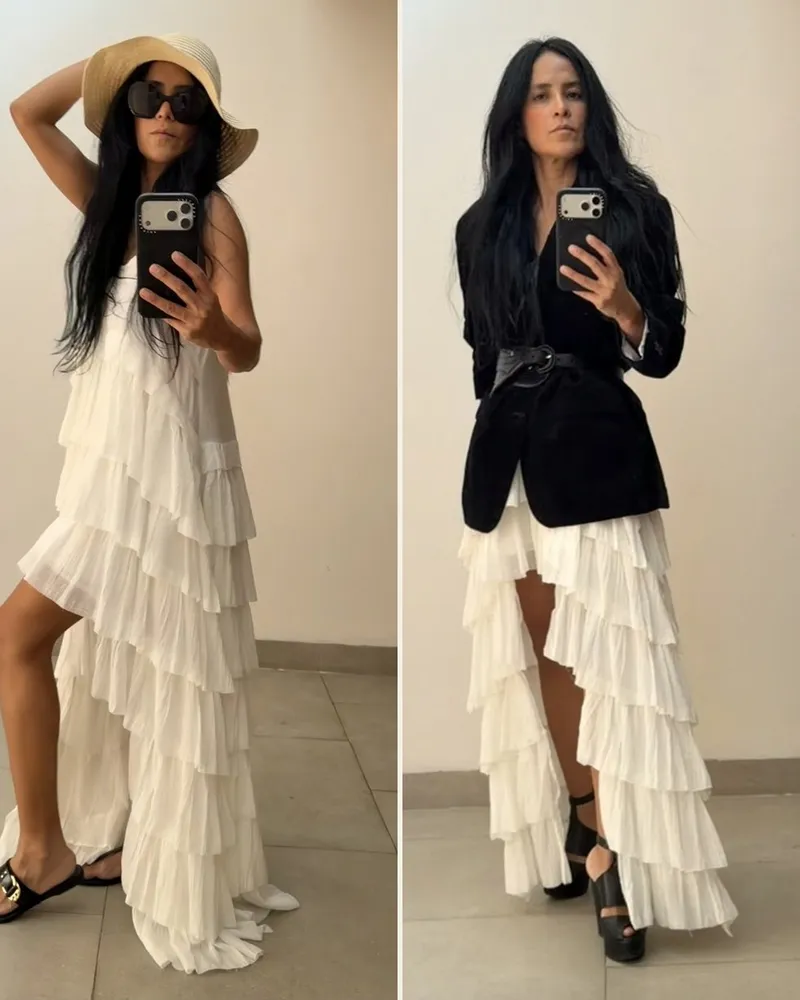
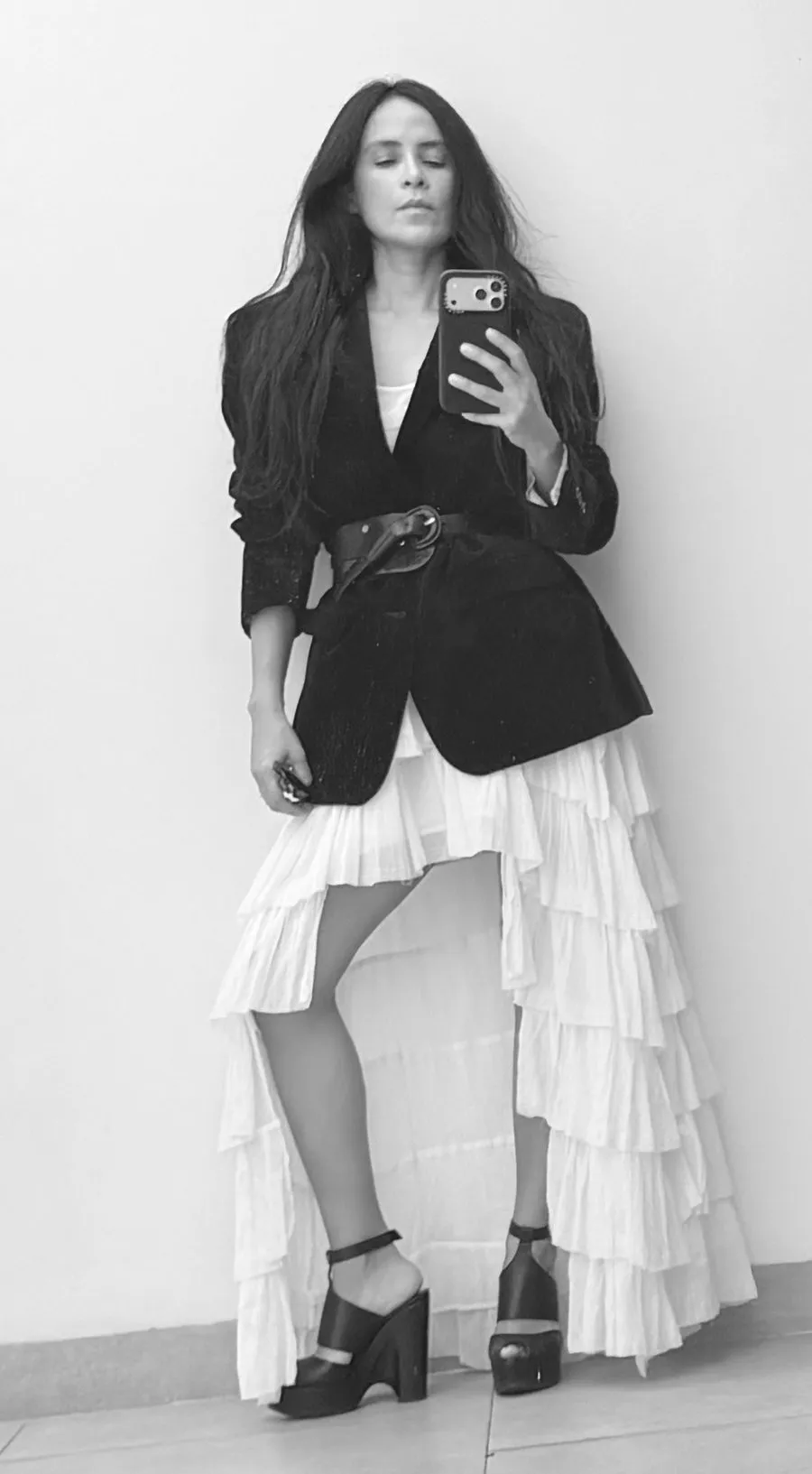
Here's the useful part of the old rule, minus the snobbery: summer white and winter white are different because of fabric and company, not because of color. A gauzy white dress with bare legs and a straw bag says July. The same dress with a tailored black blazer, a leather belt and a heavier shoe says October. White didn't change. The weight around it did.
 1 · Alone2 · Belt
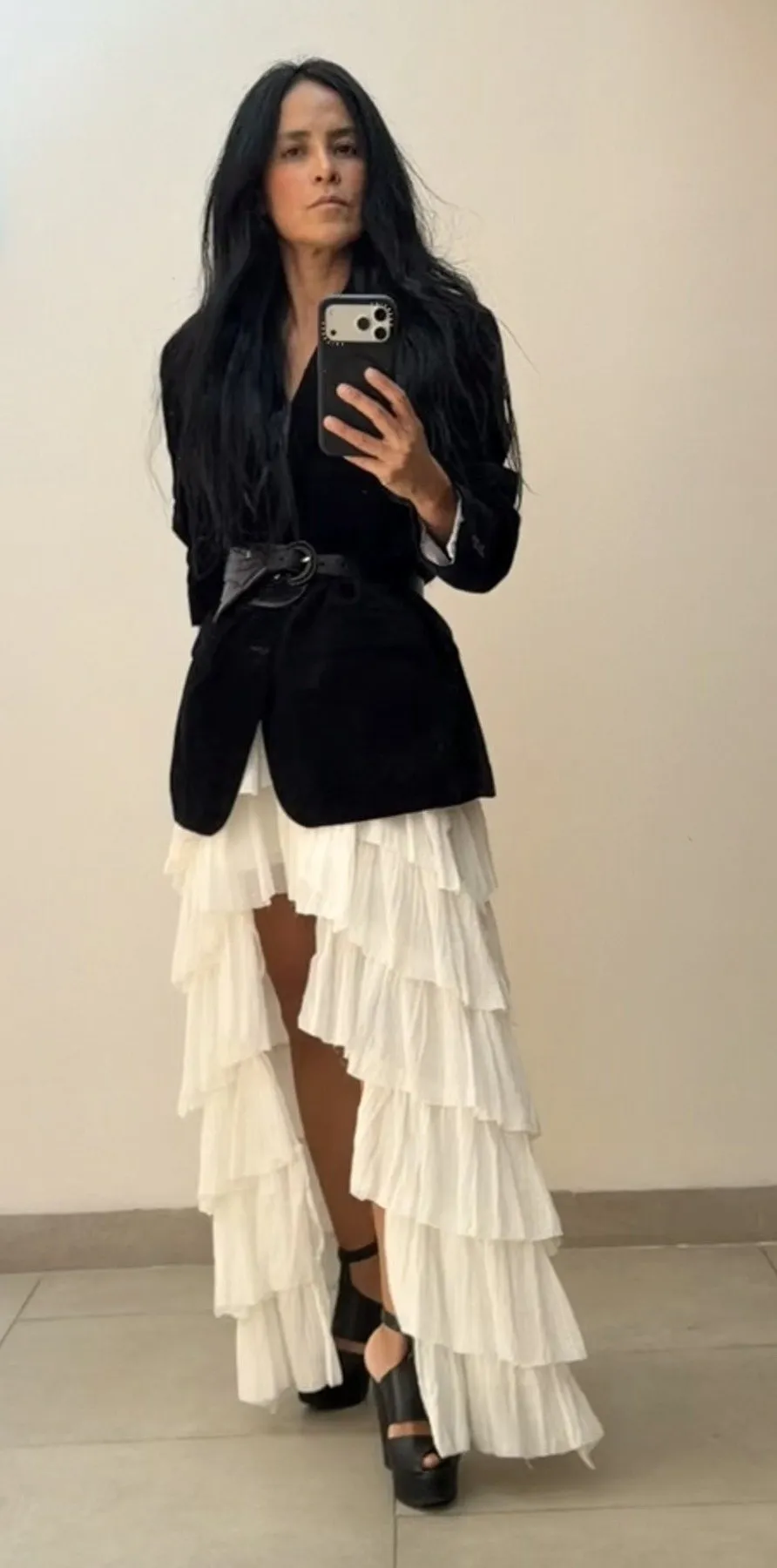 3 · Blazer
Three levers do the work. Texture: add something with body, like wool, leather, velvet or a chunky knit. Contrast: black next to white makes it look sharp and urban instead of beachy. Shoes: a platform, a boot or a closed pump anchors a light dress to the ground. Move one lever and the white dress crosses into fall; move all three and it handles winter.
The YB Method, applied: white in every season
By day, by night and in any season. That's the versatility test, and a white dress with movement passes it more easily than most colors.

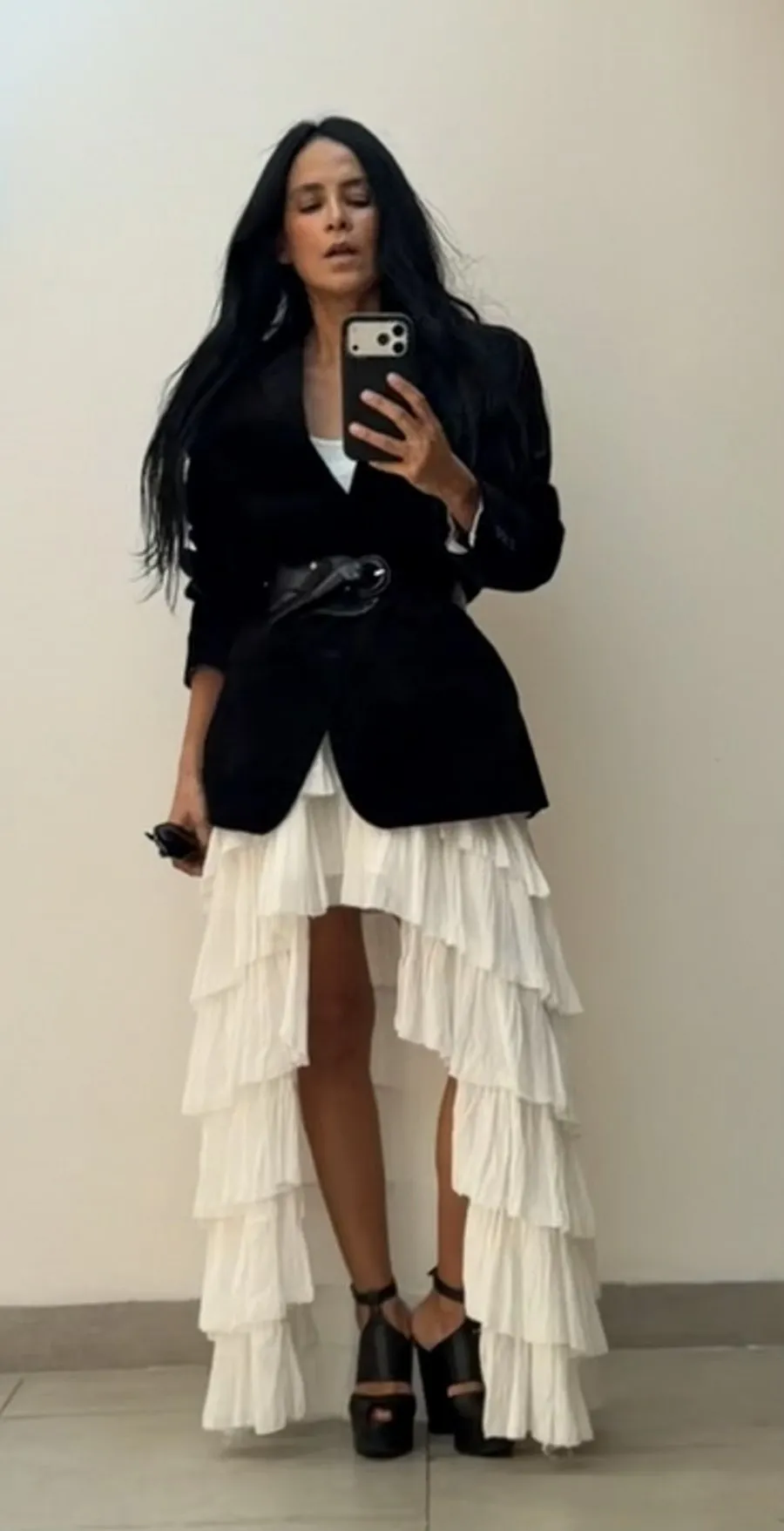
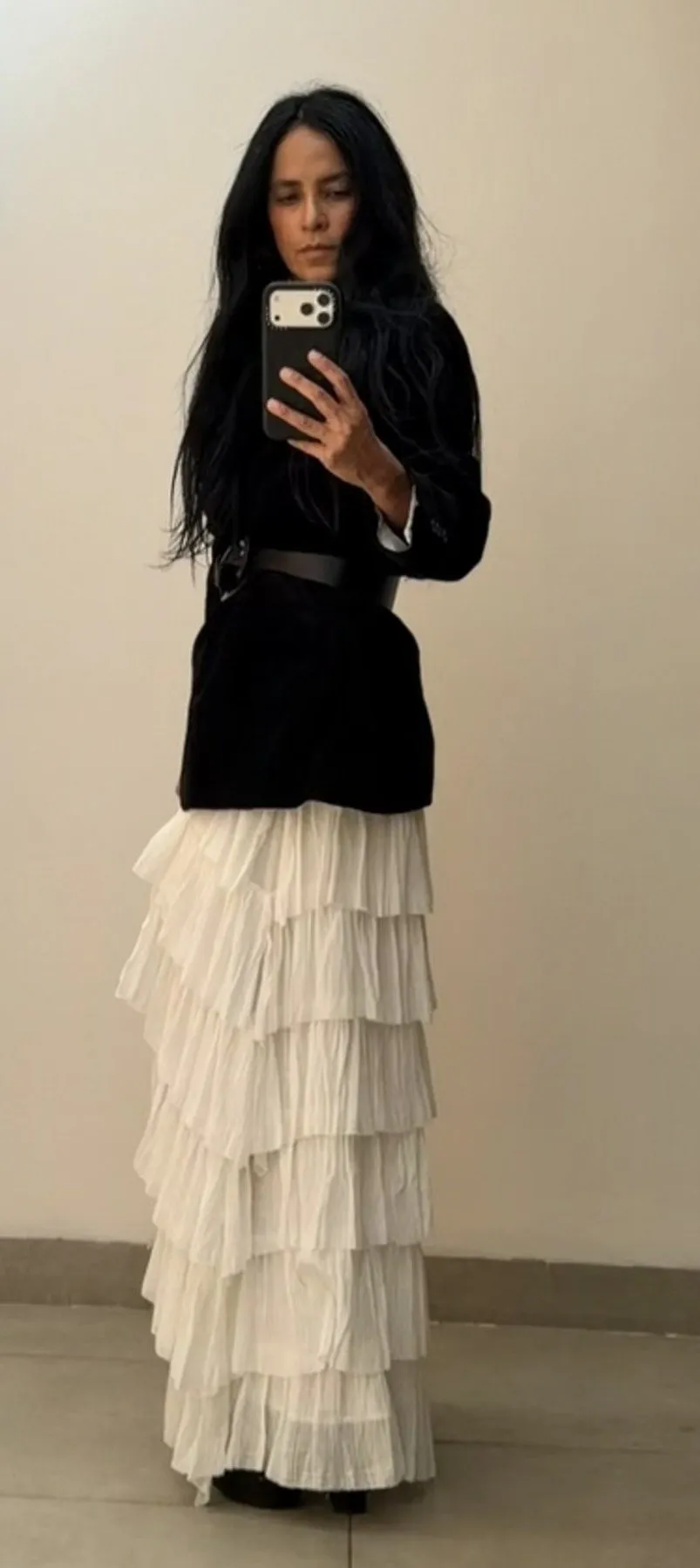
1. Hat, sunglasses, flat sandals. The summer version everyone already knows. 2. A wide black belt and platforms. The belt gives the eye a point of reference at the waist and the black adds edge. Dinner. 3. A black blazer over it. Romantic ruffles against tailoring; this is the one that takes white into fall. 4. Blazer and belt together. Wear the belt over the blazer and the whole look sharpens. 5. With a structured bag instead of straw. The smallest swap, and it tells everyone this is on purpose.
If you're just starting, begin with black and white. It's the most dependable contrast there is, and it makes the frumpy fear impossible: nothing about a white dress under a sharp black blazer is trying to hide.
Shopping smarter for white
White is unforgiving about quality, so this is where a smarter purchase pays off. Check three things in the fitting room. Opacity: hold your hand behind a single layer; if you can see it clearly, you'll need a slip, or a better dress. Lining and seams: white shows every shortcut, so look for clean, flat seams. A shade that works on you: optical white is crisp and cool; ivory and cream are softer. Hold each near your face in daylight and pick the one that makes your skin look awake.

And think about the calendar the opposite way the rule taught you. A white dress you only wear from Memorial Day to Labor Day works three months a year. The same dress with a blazer, a belt and boots works twelve. Yogurt expires. White doesn't.
Frequently asked questions
Can you wear white after Labor Day?
Where did the no white after Labor Day rule come from?
How do you wear a white dress in fall or winter?
Can women over 40 wear white?
What is winter white?
Sources and further reading
- TIME — Why We Can't Wear White After Labor Day (Laura Fitzpatrick, 2009)
- History.com — What Are the Origins of the 'No White After Labor Day' Rule? (Lesley Kennedy, 2025)
Read next
The blazer is not a uniform: a short history of a misunderstanding →Neon has no age: the color theory nobody taught you →The poncho is not a hideout: the theory of volume after 40 →A logo is an ad: what brand prominence says about you →Sweet and tough: the theory behind a dress and a leather jacket →Beauty is not pain: why comfort is a style decision →Leopard is a neutral: the history of fashion's most misjudged print →The black vest: five ways to wear the garment a king swore would never change →Velvet is not just for the holidays: how to wear a velvet blazer by day →The feather skirt is not just for parties: one star piece, three ways to wear it →Leopard on your feet: how to wear leopard print boots with almost everything →One loud piece, quiet basics: how to wear a statement coat without the costume effect →The trench coat is not a raincoat: London and Paris reinvented it (and it's already in your closet) →The corset doesn't squeeze you, it holds you: how to wear one all day without suffering →Loafers are not just for men: five ways to wear them with everything →Turn off the color and texture turns on: what black and white reveals about your style →When your outfit owns every corner: simple is not the same as invisible →Spring 2027 runway trends are already in my closet: what London, Milan and Paris showed →Tailoring that hugs: the black suit, the vest and Milan's cinched waist →The high-low hem is back: my white ruffled dress and London's runways →Leopard is the neutral of 2027: Paris just confirmed it →The evening jacket, now by day: Milan and Paris agree →