

The first designer logo was a security feature
Plot twist: the most famous monogram in fashion wasn't invented to make anyone look rich. It was invented to stop thieves. In 1896, Georges Vuitton designed the LV monogram canvas in tribute to his late father, and counterfeiting was already a problem for the Paris trunk maker. The pattern was meant to be so complicated that copies would be obvious.
 The logo
 Your face
So the logo began life as a signature of authenticity, a way of saying 'this is the real one'. Somewhere along the way it turned into a signature of status, a way of saying 'look how much I spent'. Those are very different sentences, and the second one is the reason we need to talk.
What the research says about loud and quiet
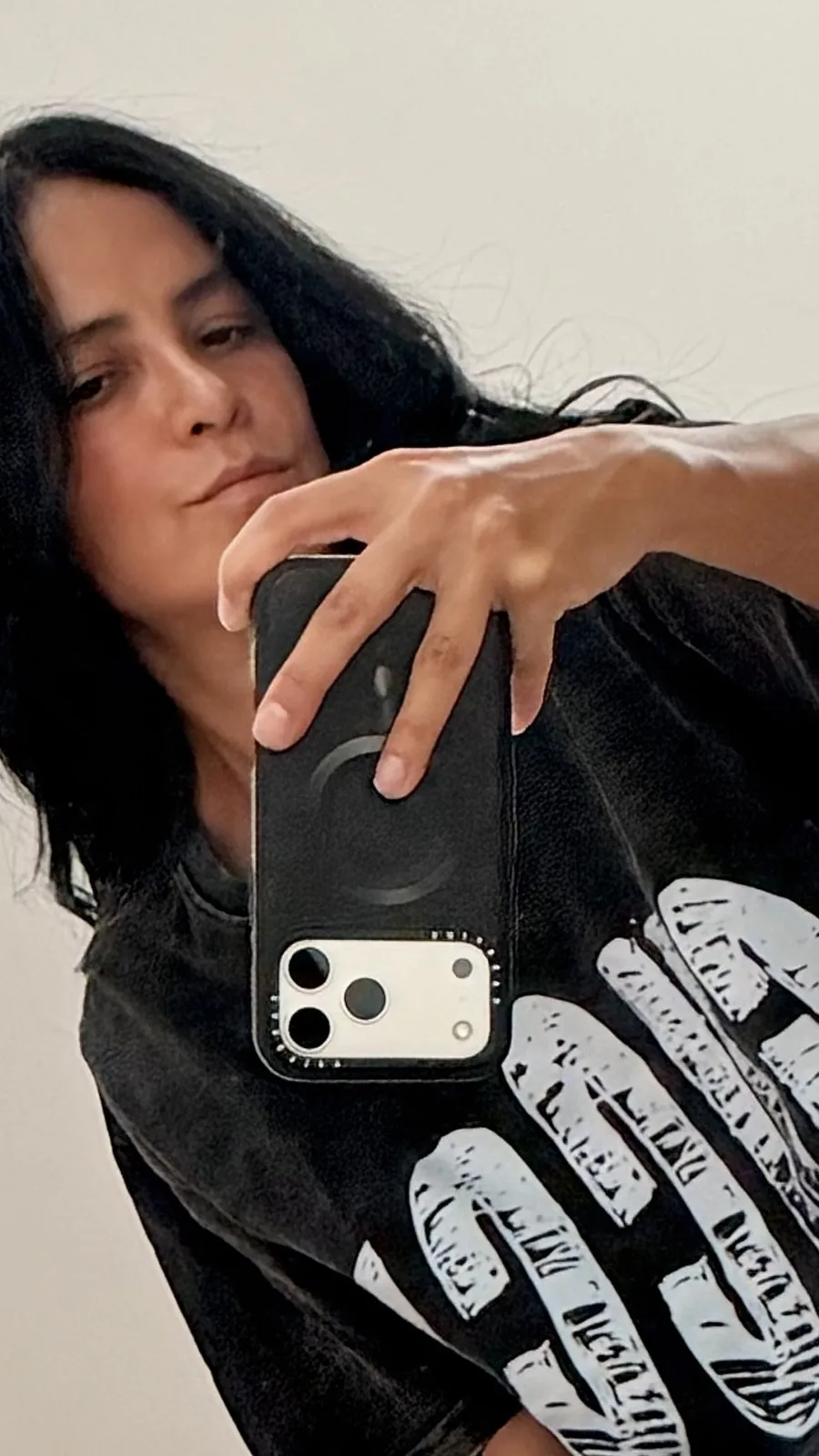
A big logo is a microphone. Make sure you're the one speaking.
Economists noticed the status game long ago. In 1899 Thorstein Veblen coined the term conspicuous consumption in The Theory of the Leisure Class to describe spending meant to be seen. More than a century later, marketing researchers measured it.
 Loud
 Talking
 Whisper
In a 2010 study in the Journal of Marketing, Young Jee Han, Joseph Nunes and Xavier Drèze introduced the idea of brand prominence: how loudly a product displays its logo. Their findings are deliciously ironic. Luxury brands often charge more for the quiet versions, and counterfeiters mostly copy the loud ones. Wealthy buyers with a low need for status preferred subtle signals only other insiders recognize, like Gucci's bamboo handle, while the loudest logos appealed to people who wanted to be seen as rich.
Translation: the louder the logo, the more it tends to say 'please notice me' rather than 'I'm comfortable here'. That's not a moral judgment. It's just useful to know what your clothes are announcing before they announce it.
Golden Key 01: one star only
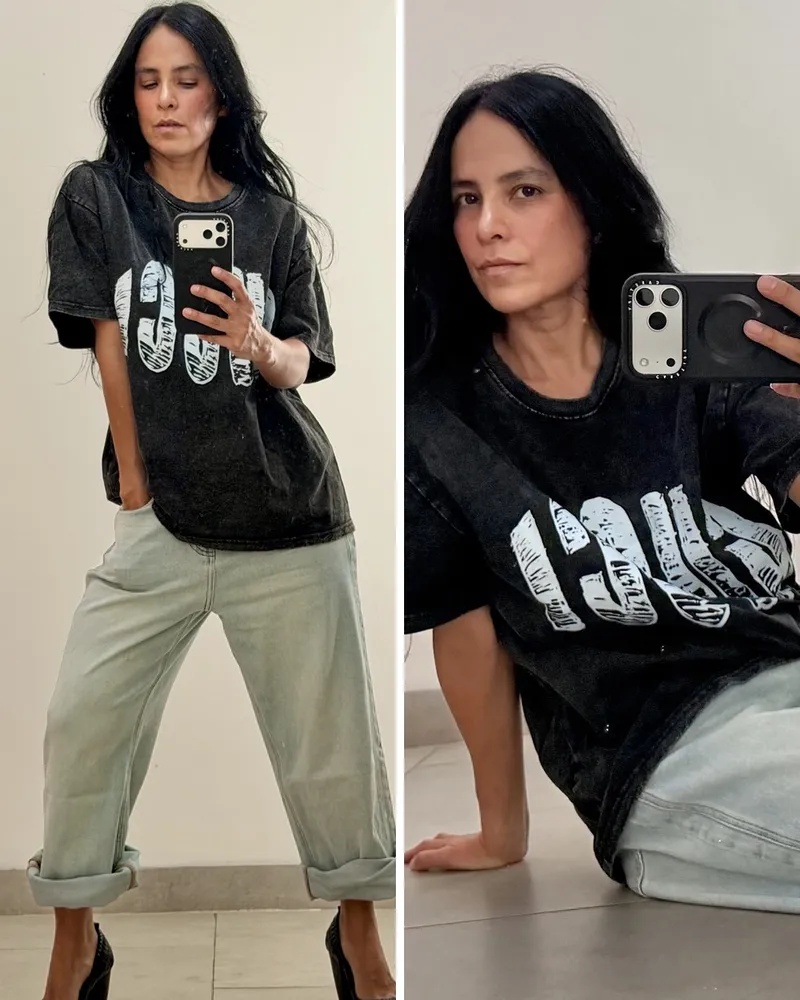
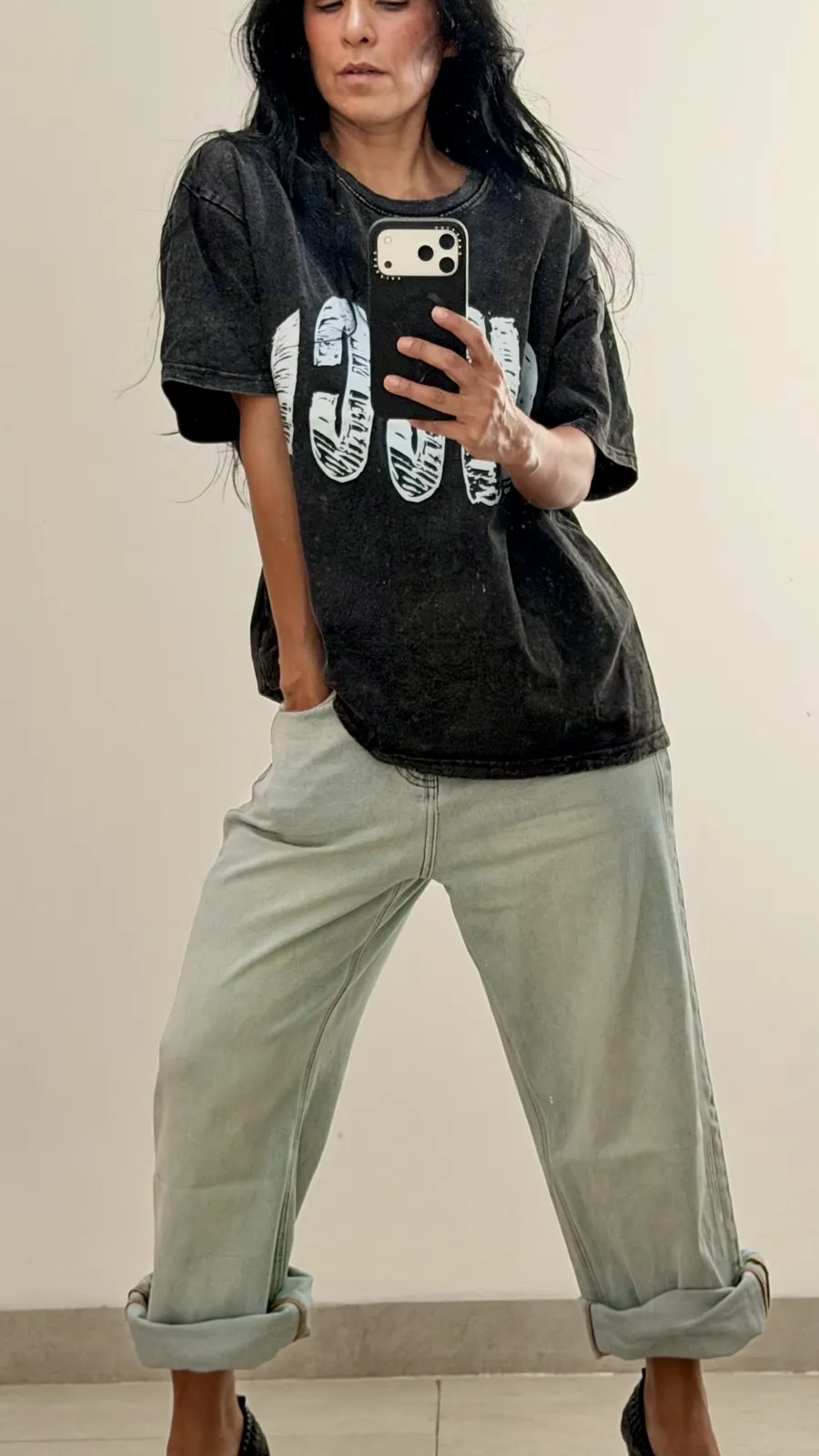
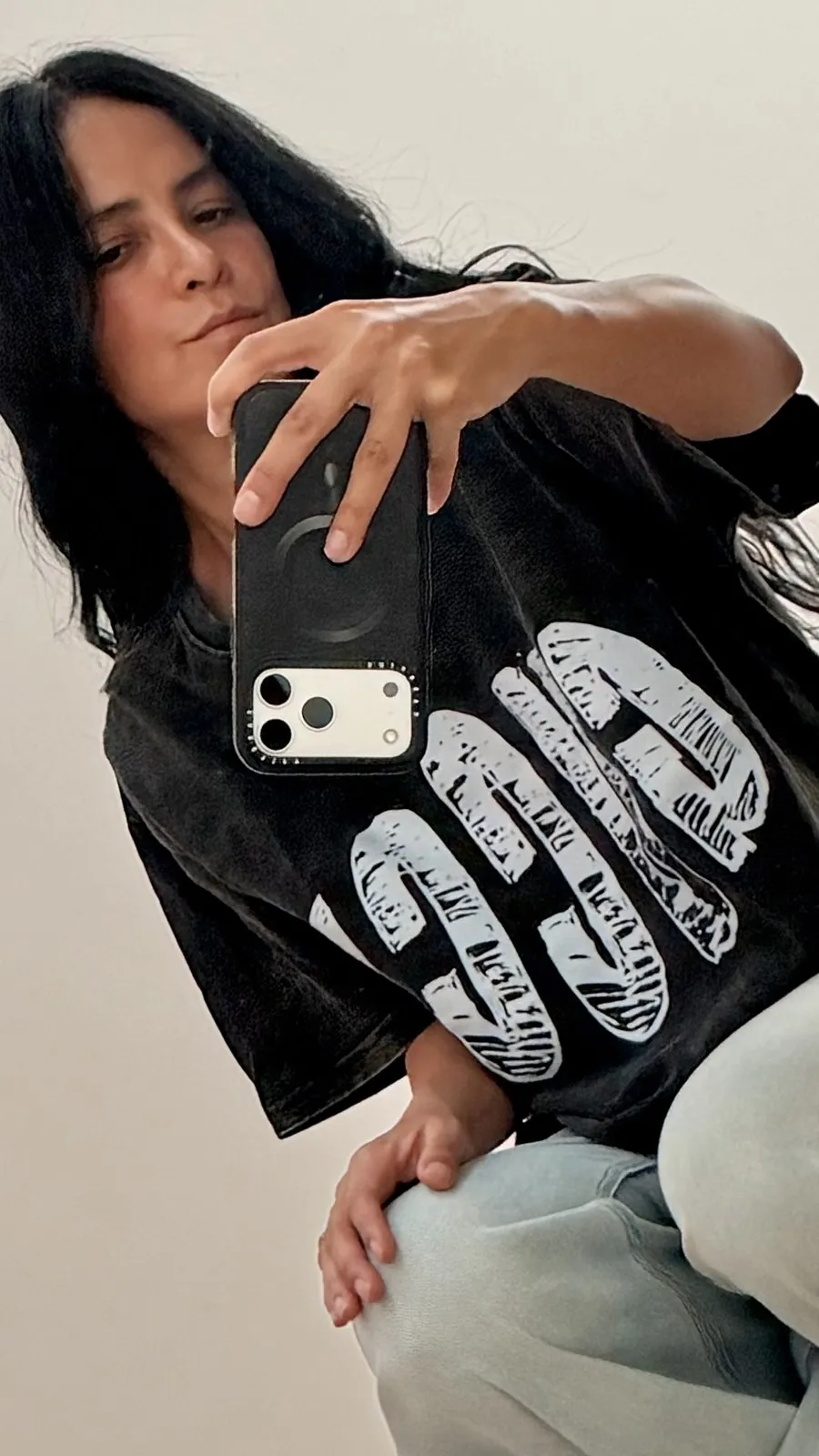
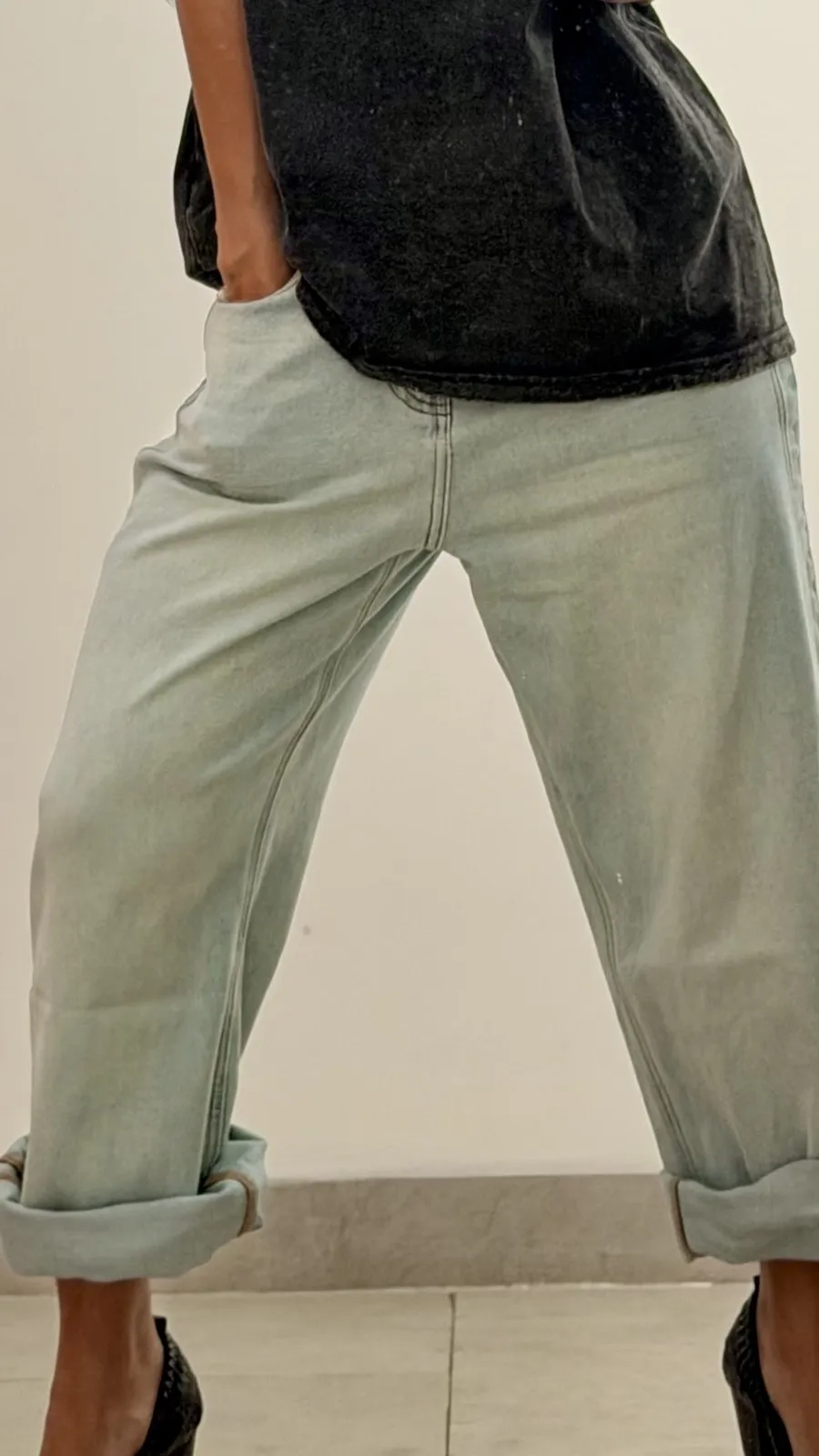
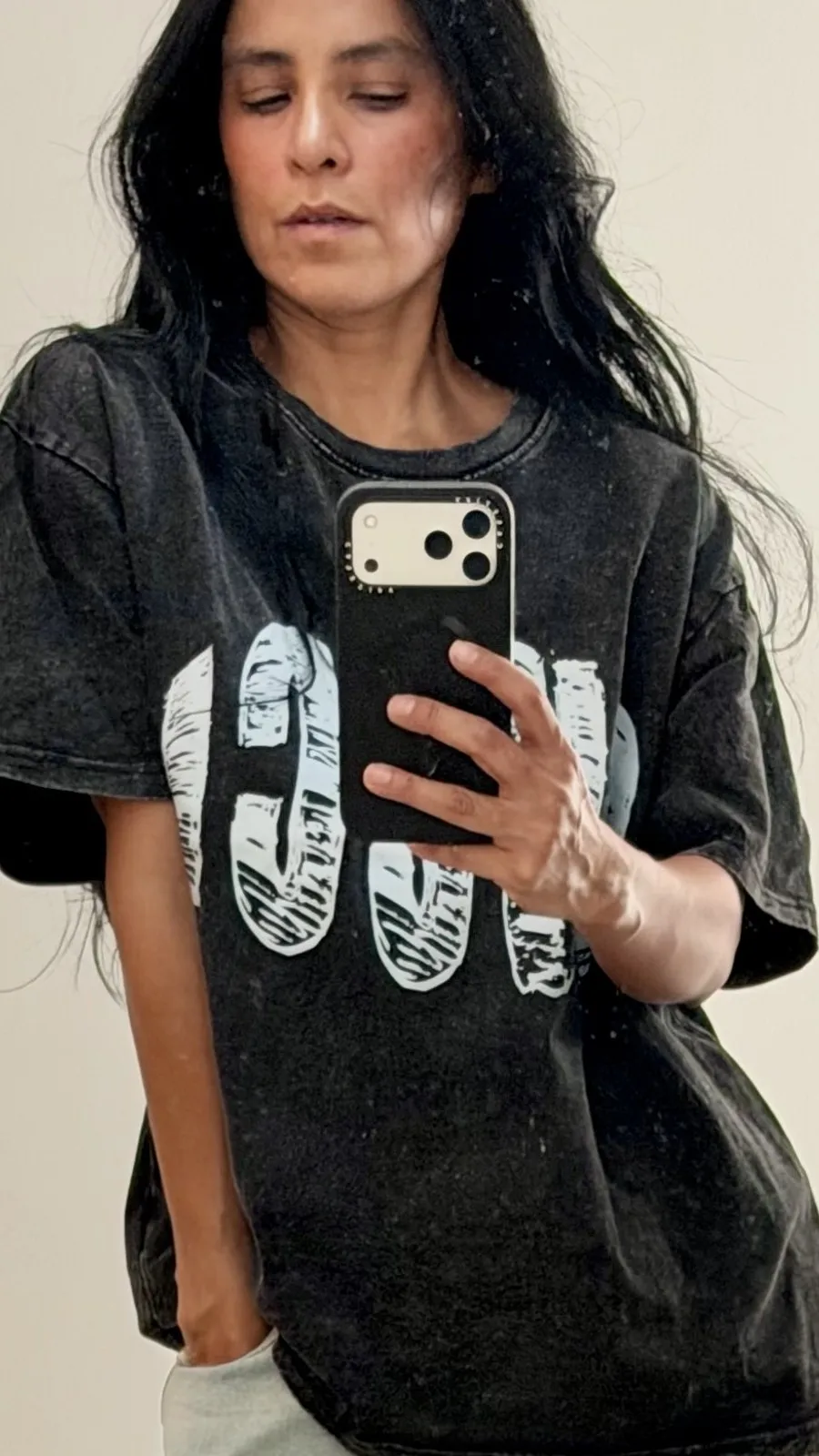
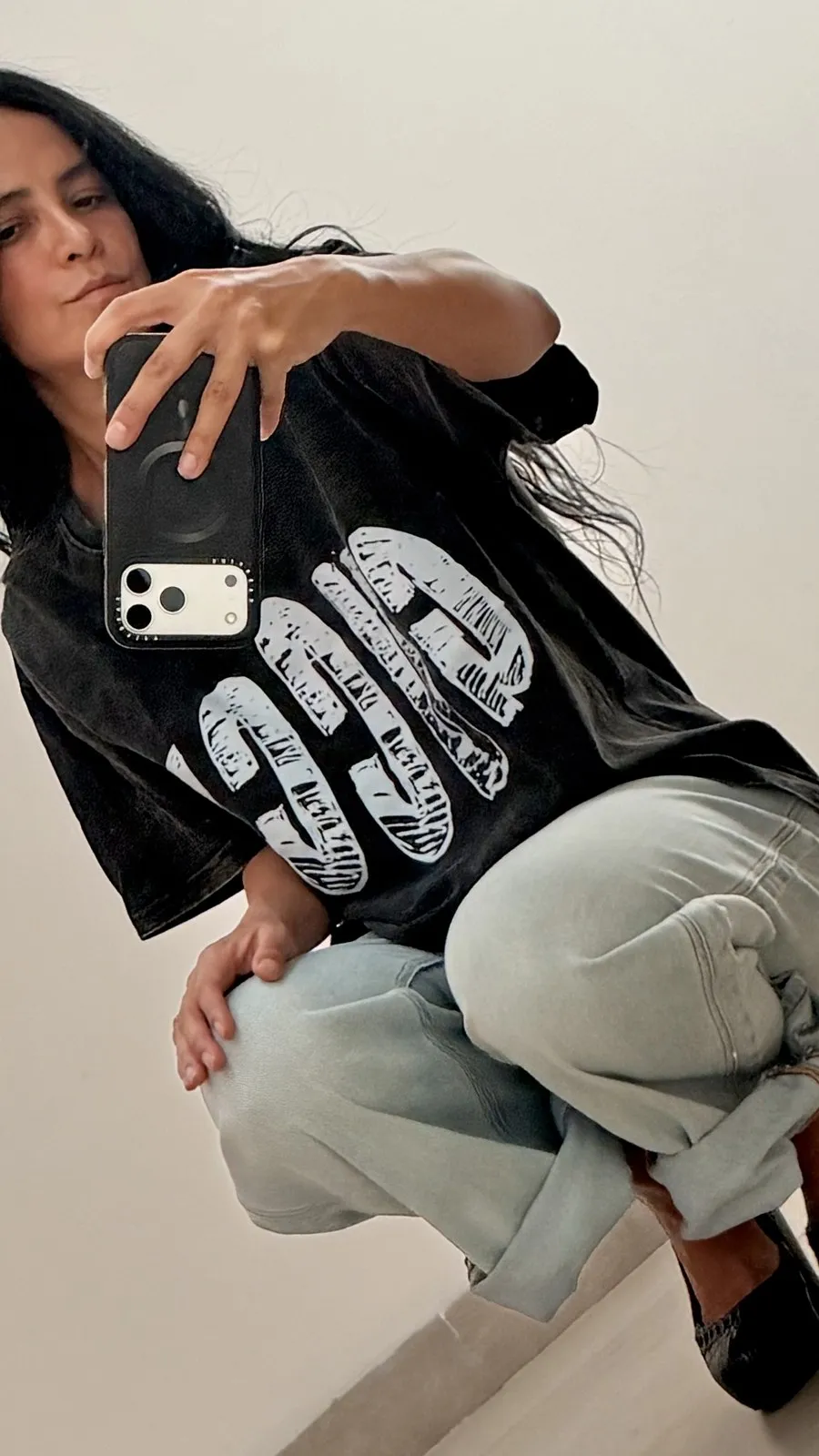
Now the styling theory, because a logo tee is not a crime. A big logo is a focal point: the first thing the eye lands on. And a look follows the first Golden Key: one star only. Logo plus print plus sparkle plus another brand: everything competes, and nothing stands out.
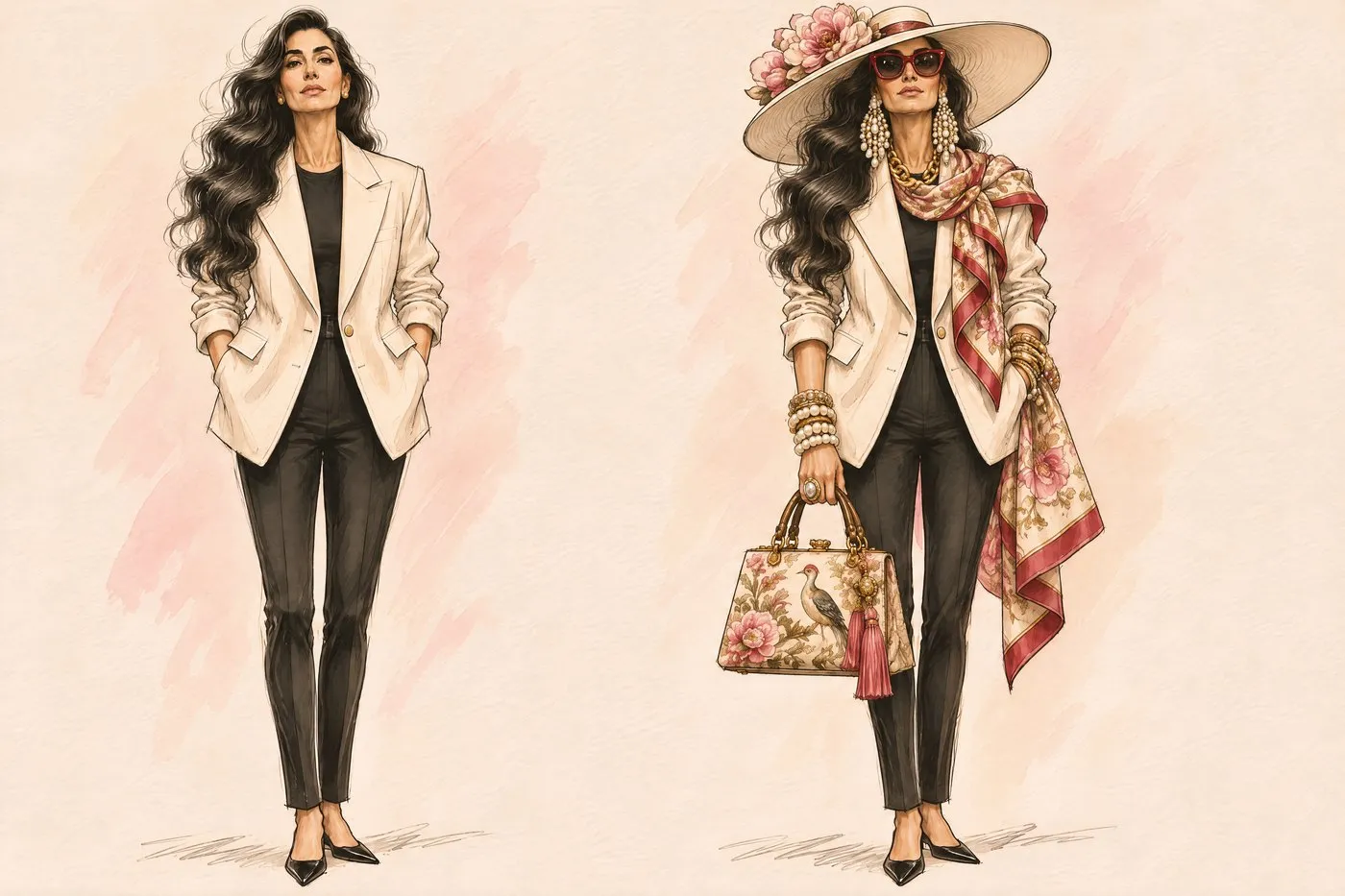
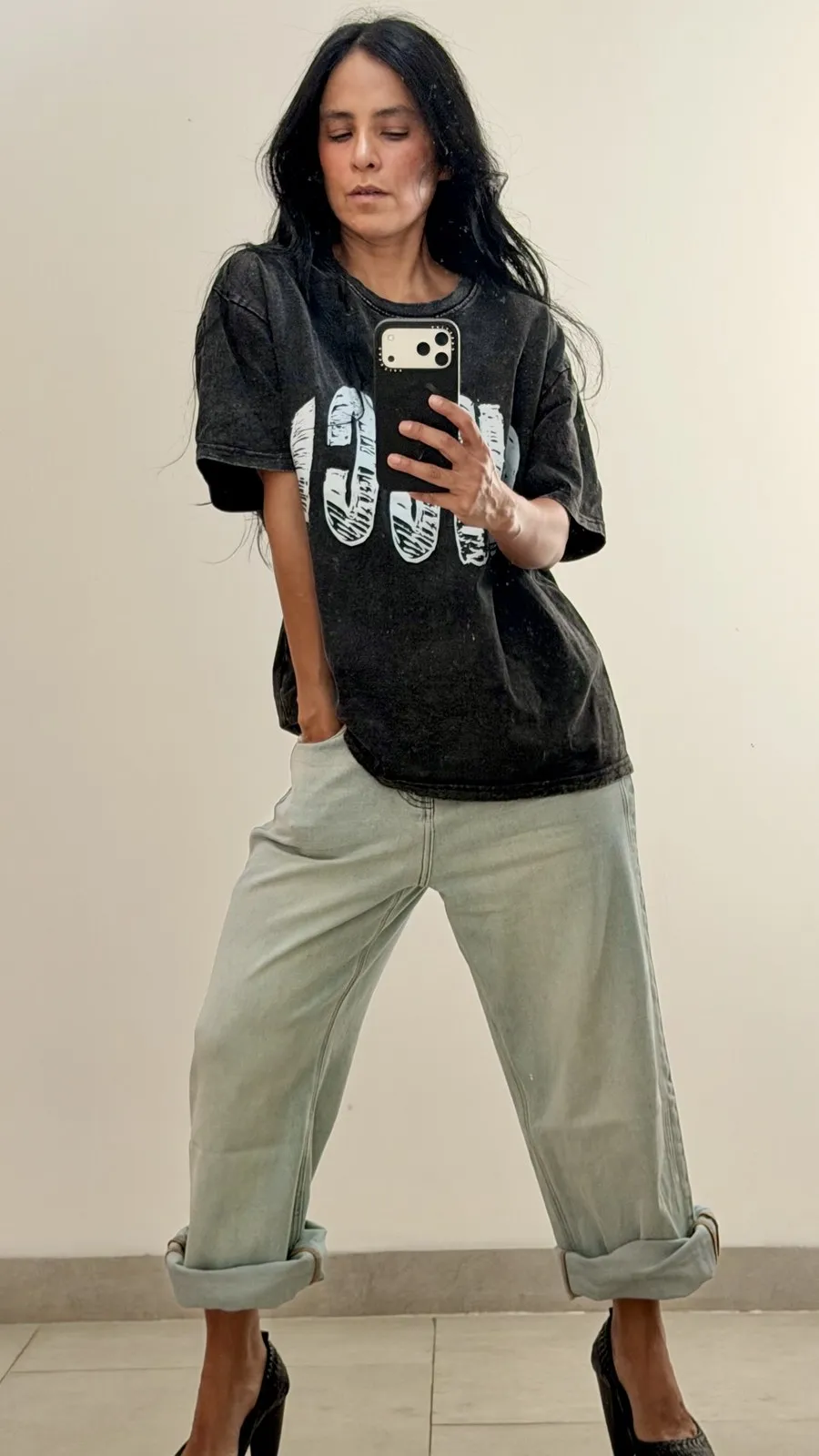
So if the logo is the star, everything else plays a supporting role. Calm denim, a black blazer, white sneakers, nothing else that shouts. The logo gets to speak, and you get to stay the person wearing it. If you add a cap or a bag that also has branding, keep it dark and small, an extra rather than a co-star.
A quick self-test before you buy: imagine the same garment with the logo removed. Would you still want it at the same price? If the answer is no, you're not buying a sweater, you're buying a badge, and badges go out of style faster than cuts and fabrics do. If the answer is yes, the logo is a bonus, and you can wear it without letting it do all the talking. The same test works in reverse for vintage and secondhand pieces, where an old logo can be charming precisely because nobody is selling it to you anymore.
The YB Method, applied
By day, by night and in any season. The oversized logo tee goes with ripped jeans and sneakers for coffee, where it reads relaxed and a little ironic. Under a black blazer with a cap, it turns slightly rebellious, the uniform of someone who knows the rules well enough to bend them. With a straight skirt and a belt, it becomes evening casual. In every version, the logo supports the outfit; it doesn't run it.


And the smart-shopping question is simple. Before you buy something with a big logo, cover the logo with your hand. Do you still like the cut, the fabric, the way it hangs? If yes, the logo is a bonus. If the garment only works because of the letters, you're paying for an ad, and the brand should be paying you.
Quality lives in the fabric and in how you feel inside it, not in the letters on the front. Wear the logo. Just make sure you're the one doing the talking.
Frequently asked questions
Are logos tacky after 40?
How do you style a logo T-shirt?
What is quiet luxury?
Why do luxury brands put logos on products?
How can I tell if a logo piece is worth buying?
Sources and further reading
- FashionUnited — Louis Vuitton marks 130 years of its Monogram
- American Marketing Association — Han, Nunes & Drèze, 'Signaling Status with Luxury Goods: The Role of Brand Prominence' (Journal of Marketing, 2010)
- USC News — When the quiet logo speaks volumes (2010)
- Thorstein Veblen, The Theory of the Leisure Class (1899), Project Gutenberg
Read next
The blazer is not a uniform: a short history of a misunderstanding →Neon has no age: the color theory nobody taught you →The poncho is not a hideout: the theory of volume after 40 →Sweet and tough: the theory behind a dress and a leather jacket →Beauty is not pain: why comfort is a style decision →Leopard is a neutral: the history of fashion's most misjudged print →The black vest: five ways to wear the garment a king swore would never change →Velvet is not just for the holidays: how to wear a velvet blazer by day →White doesn't expire in September: the truth about no white after Labor Day →The feather skirt is not just for parties: one star piece, three ways to wear it →Leopard on your feet: how to wear leopard print boots with almost everything →One loud piece, quiet basics: how to wear a statement coat without the costume effect →The trench coat is not a raincoat: London and Paris reinvented it (and it's already in your closet) →The corset doesn't squeeze you, it holds you: how to wear one all day without suffering →Loafers are not just for men: five ways to wear them with everything →Turn off the color and texture turns on: what black and white reveals about your style →When your outfit owns every corner: simple is not the same as invisible →Spring 2027 runway trends are already in my closet: what London, Milan and Paris showed →Tailoring that hugs: the black suit, the vest and Milan's cinched waist →The high-low hem is back: my white ruffled dress and London's runways →Leopard is the neutral of 2027: Paris just confirmed it →The evening jacket, now by day: Milan and Paris agree →