






A proverb with a long resume
The idea is old and travels well. French has il faut souffrir pour être belle, German has wer schön sein will, muss leiden, Russian says beauty requires sacrifice. Folklorists have recorded it passed from mothers to daughters as advice about grooming, discipline and appearances. Fashion history gave it plenty of material to work with: corsets, girdles, shoes engineered for standing still.
 Volume
 Waist
 Attitude
And then, every so often, someone in fashion pushes back. In the early twentieth century, Paul Poiret, the designer the Met calls one of the founders of modern dress, liberated the body first from the petticoat in 1903 and then from the corset in 1906. Clothes that hung from the shoulders replaced clothes that squeezed the waist. The world didn't end. Women just breathed.
What your feet would say if they could talk
Discomfort shows. It shows in your face, your shoulders and the way you walk.
Let's bring in the evidence. In a 2014 survey of 1,000 U.S. adults, the American Podiatric Medical Association found that 49 percent of women wear high heels and 71 percent of those who do say they hurt. The best part: 38 percent said that when shoes hurt, they'd wear them anyway if they liked them. We are a loyal species.
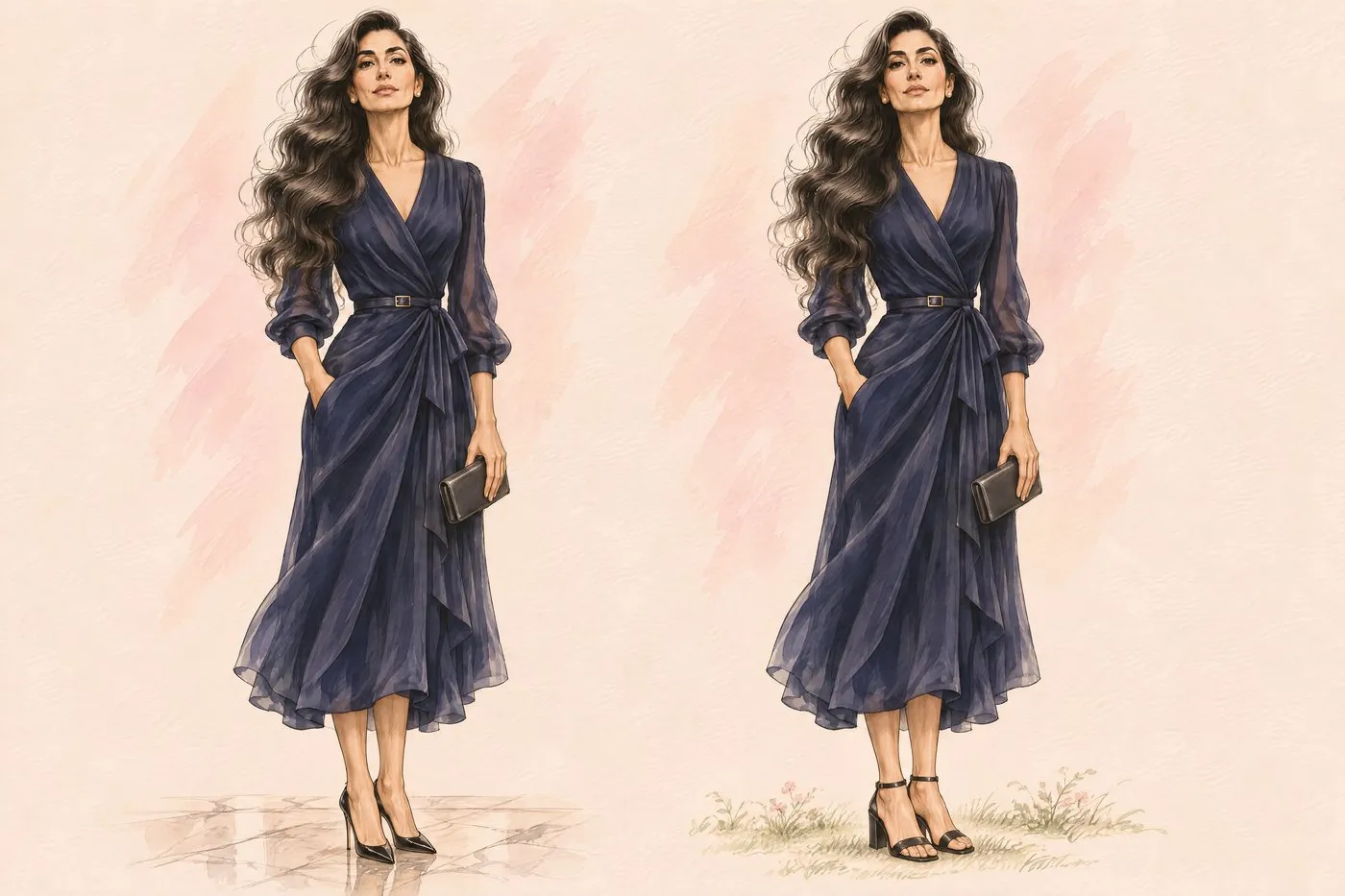
Here's the style problem, beyond the bunions. Pain is visible. A woman in shoes that hurt shortens her stride, tenses her shoulders and stops smiling with her eyes. Nobody remembers the shoes; they remember that she looked like she wanted to go home. Ease is the most underrated accessory there is. It changes your posture, your walk and your face, and no price tag can fake it.
That doesn't mean that only flat shoes and sweatpants are allowed. It means comfort is a design requirement, like fit or color, not a reward you get after the photo.
Striking and comfortable: the engineering
Comfortable glamour is a matter of engineering, and it has a few reliable tricks. Put the drama where it doesn't hurt. Volume, color and texture live in skirts, tops and accessories; the parts that carry your weight can be quieter. A tulle skirt makes more noise than any stiletto.
 On its own
 With bikers
Build in the safety net. Bike shorts under a skirt or dress solve rubbing, wind and sitting on the floor at a picnic in one move, and in a bold color they can even become part of the look. Choose sensible heights. Podiatrists generally suggest staying under about two inches for everyday wear, and a block heel or a platform spreads the pressure better than a stiletto. Test before you buy. Sit, walk, climb a stair, lift your arms. If you need to rehearse how to stand in it, it's not your size or it's not your garment.
And a word about the 'just for the photo' argument. Photos last, yes, but so do blisters, and the evening between the two is the part you actually live. If a look only works standing still under good lighting, it's a prop, not an outfit. The best compliment an outfit can get isn't 'you look amazing in that picture'; it's 'you look like yourself, only more'. That only happens when you forget what you're wearing because it simply works.
The YB Method, applied
By day, by night and in any season, and here the star is the tulle skirt, the garment everyone assumes is uncomfortable and impractical. With a fitted black top and platform sandals, it's evening drama. With a T-shirt, sneakers and dark sunglasses, it's street style. And pulled up a little with bike shorts underneath, it becomes the outfit for a day when you'll walk, sit, climb and still look like you planned it.
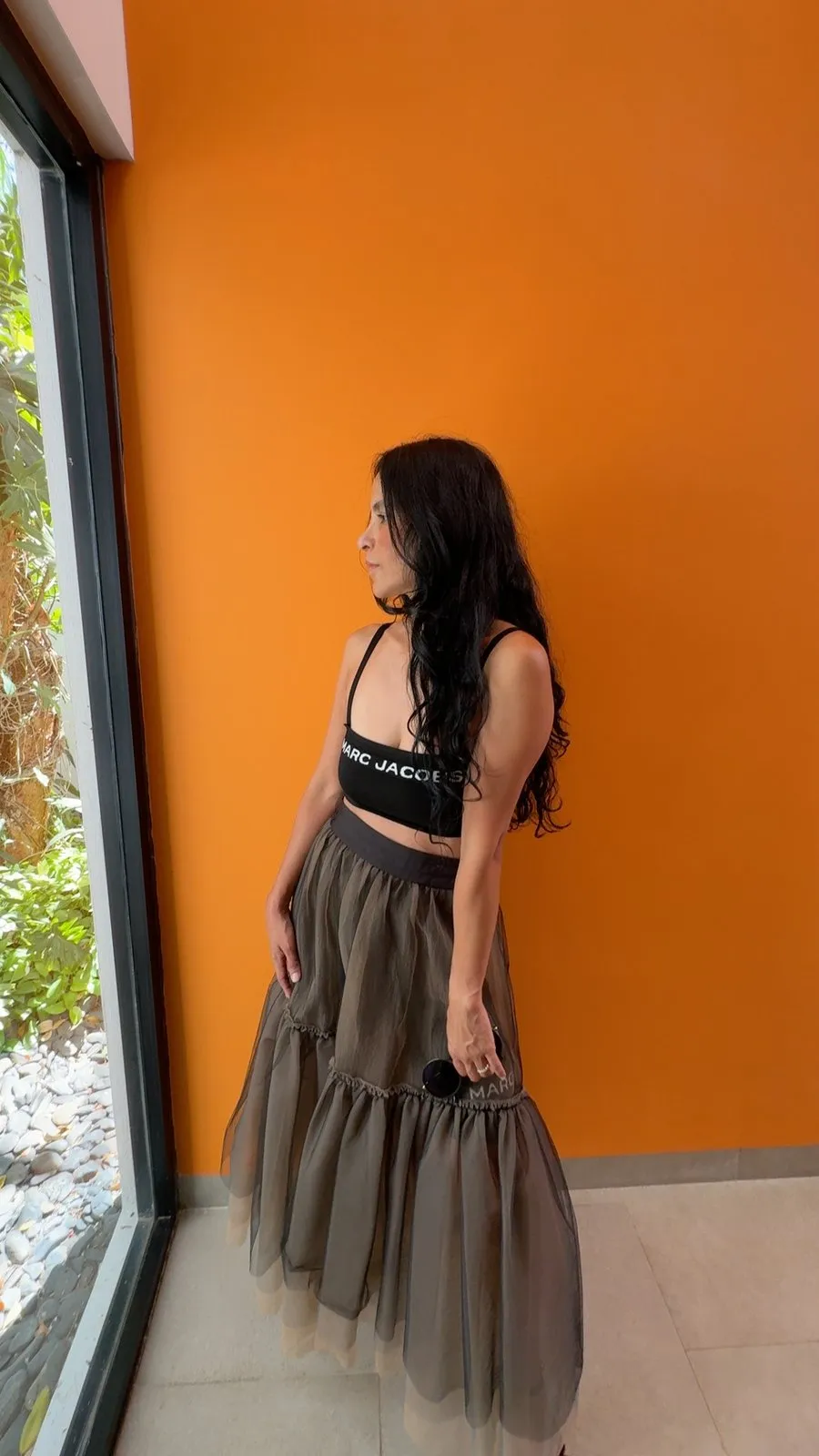

The smart-shopping key follows naturally: if it hurts in the fitting room, let it go, because it won't hurt less at the party. The item you'll actually wear thirty times is the one that feels good on the first try. That's not lowering your standards. That's raising them.
So no, to look good you don't have to suffer. You have to choose better. The woman who's comfortable in her clothes always looks like she belongs in the room.
Frequently asked questions
Do you have to suffer to be beautiful?
Are high heels bad for your feet?
How do you wear a tulle skirt comfortably?
What heel height is most comfortable?
How can I look elegant and still be comfortable?
Sources and further reading
- The Metropolitan Museum of Art — Paul Poiret (1879–1944), Heilbrunn Timeline
- American Podiatric Medical Association via PR Newswire — High heels are biggest culprit of female foot pain (2014)
- USC Digital Folklore Archives — French proverb: «Il faut souffrir pour être belle»
Read next
The blazer is not a uniform: a short history of a misunderstanding →Neon has no age: the color theory nobody taught you →The poncho is not a hideout: the theory of volume after 40 →A logo is an ad: what brand prominence says about you →Sweet and tough: the theory behind a dress and a leather jacket →Leopard is a neutral: the history of fashion's most misjudged print →The black vest: five ways to wear the garment a king swore would never change →Velvet is not just for the holidays: how to wear a velvet blazer by day →White doesn't expire in September: the truth about no white after Labor Day →The feather skirt is not just for parties: one star piece, three ways to wear it →Leopard on your feet: how to wear leopard print boots with almost everything →One loud piece, quiet basics: how to wear a statement coat without the costume effect →The trench coat is not a raincoat: London and Paris reinvented it (and it's already in your closet) →The corset doesn't squeeze you, it holds you: how to wear one all day without suffering →Loafers are not just for men: five ways to wear them with everything →Turn off the color and texture turns on: what black and white reveals about your style →When your outfit owns every corner: simple is not the same as invisible →Spring 2027 runway trends are already in my closet: what London, Milan and Paris showed →Tailoring that hugs: the black suit, the vest and Milan's cinched waist →The high-low hem is back: my white ruffled dress and London's runways →Leopard is the neutral of 2027: Paris just confirmed it →The evening jacket, now by day: Milan and Paris agree →