


The garment that was designed to never change
The vest has a birthday, which is more than most clothes can say. On October 8, 1666, the diarist Samuel Pepys wrote that King Charles II had announced in council "his resolution of setting a fashion for clothes which he will never alter. It will be a vest." The idea, borrowed from the Persian court, was to make English nobles dress more soberly and spend less on French extravagance. A long coat, a vest underneath, breeches: the ancestor of the three-piece suit.
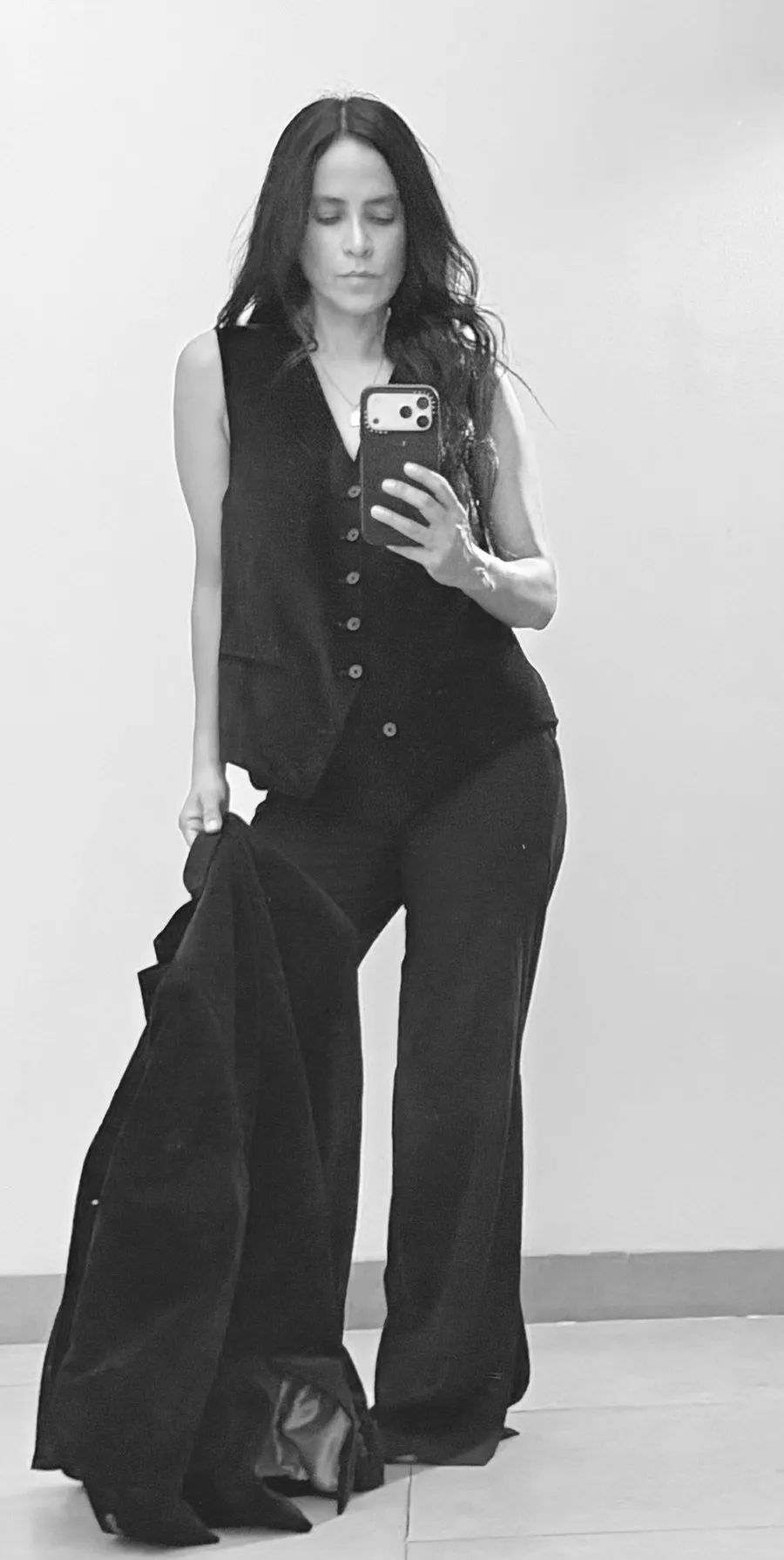
Here's the delicious part. The king wanted a garment that would never change, and it has changed constantly ever since. It went from knee length to hip length, from brocade to wool, from the court to the office, and then, in the twentieth century, it nearly disappeared as menswear got more casual. A piece born to stand still turned out to be one of the most adaptable things a person can wear. Keep that in mind; we'll come back to it.
How the vest crossed over to our side of the closet
A vest doesn't dress you up or down. It decides where the eye goes.
In 1977, Diane Keaton walked into Annie Hall in a man's vest, a white shirt, wide khakis and a tie, and half the women in America went shopping in the men's department. The costume designer was Ruth Morley, and Ralph Lauren supplied some of the pieces, but Lauren himself has set the record straight: "Annie's style was Diane's style." Keaton had borrowed the look from the women she saw on the streets of SoHo.
 Shirt
 Vest
 Blazer
That's the real lesson of the vest's second life: it entered women's fashion not as a uniform but as a personal decision. Nobody told Keaton it was appropriate. She wore it because it looked like her. Which is exactly the opposite of every 'after 40, never wear' list you've ever scrolled past.
Why it works on the body you have today
Now the theory, because a vest isn't flattering by magic. Three things are happening. First, it defines the waist without squeezing it: the cut follows the torso and stops at the hip, so the eye reads a waistline even when nothing is tight. Second, the row of buttons draws a vertical line down the center of the body, and the eye follows lines. Third, it adds a layer with no sleeves, so you get structure on the torso without extra fabric on the arms or shoulders.
 1 · On its own
 2 · Blazer draped3 · Blazer on
Put that together and the vest does what a belt does, only quieter. It gives a shirt, a tee or a slip dress a point of reference. That's why the same white shirt looks like pajamas when it's untucked and alone, and like an outfit the second a vest goes on top. Big with big reads as relaxed; big with something defined reads as intention.
The YB Method, applied: five ways
By day, by night and in any season. This is the versatility test: if one piece can go to five different places without looking like it's trying too hard, it earns its spot. The black vest passes easily.
 Day
 Night
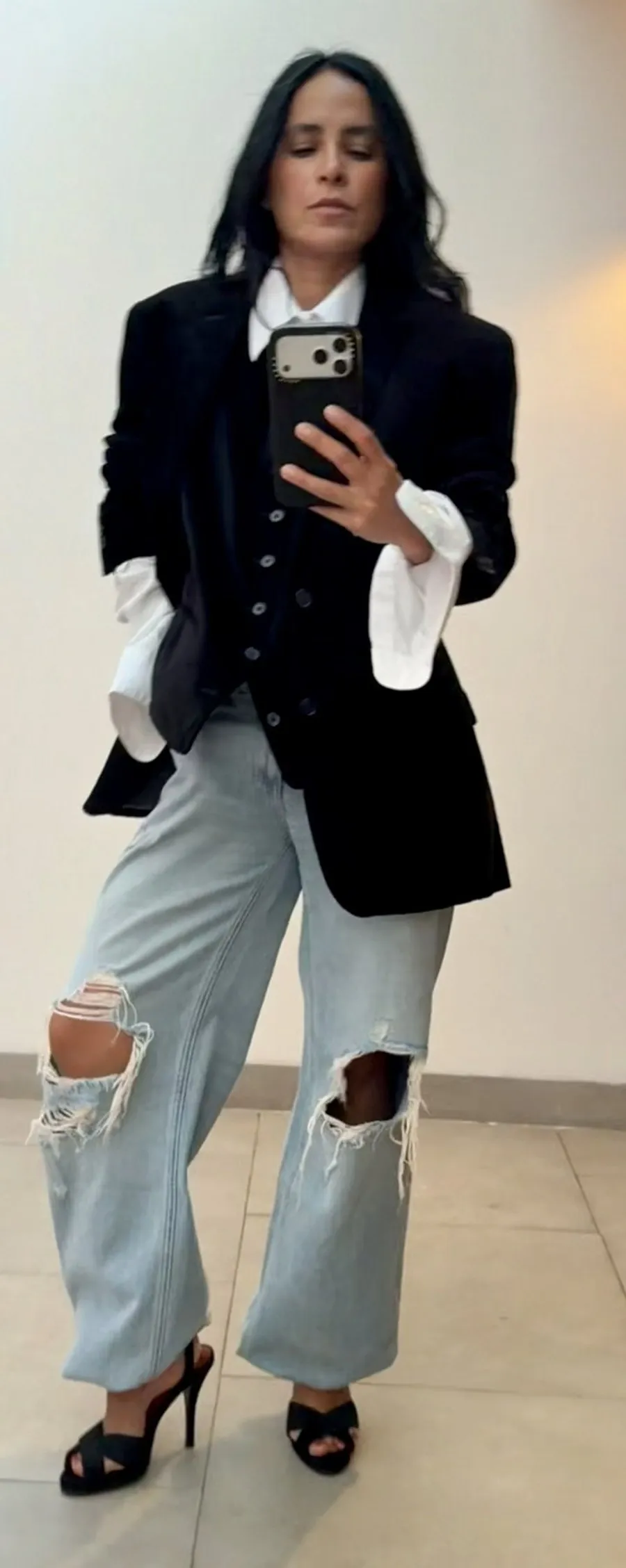
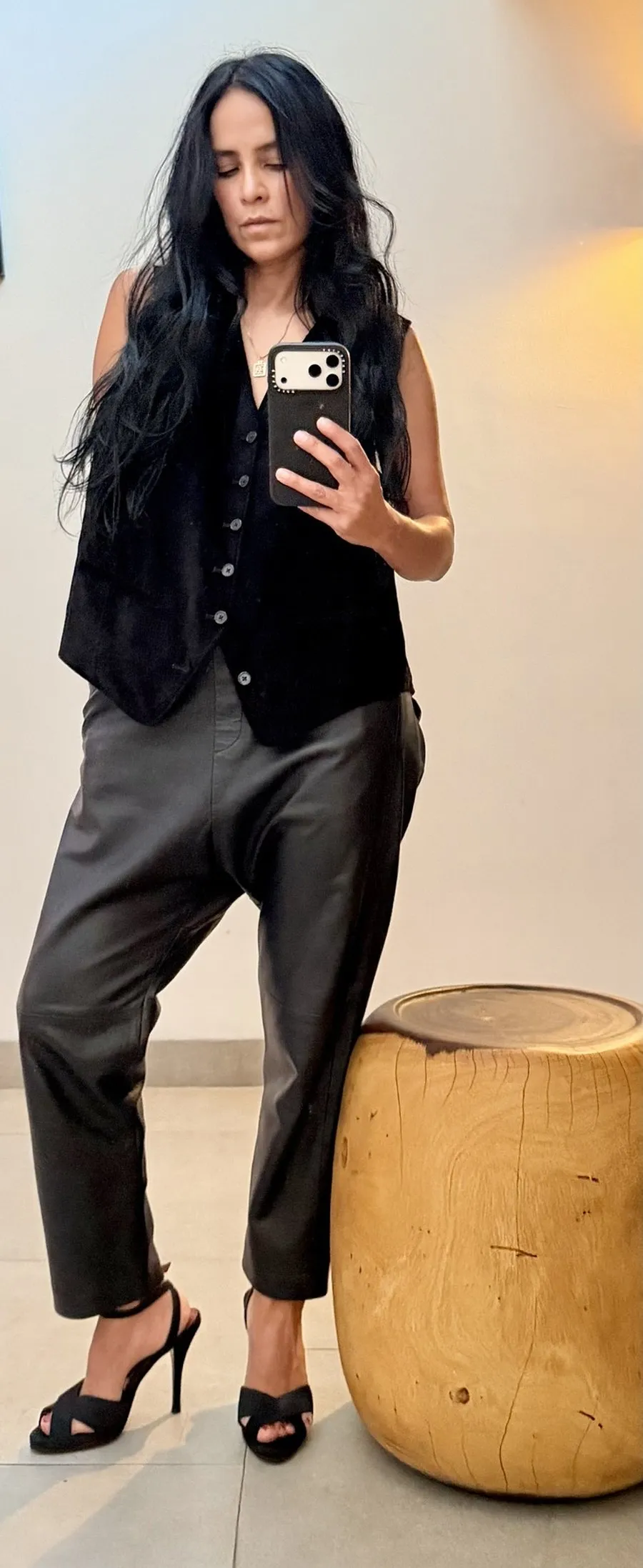
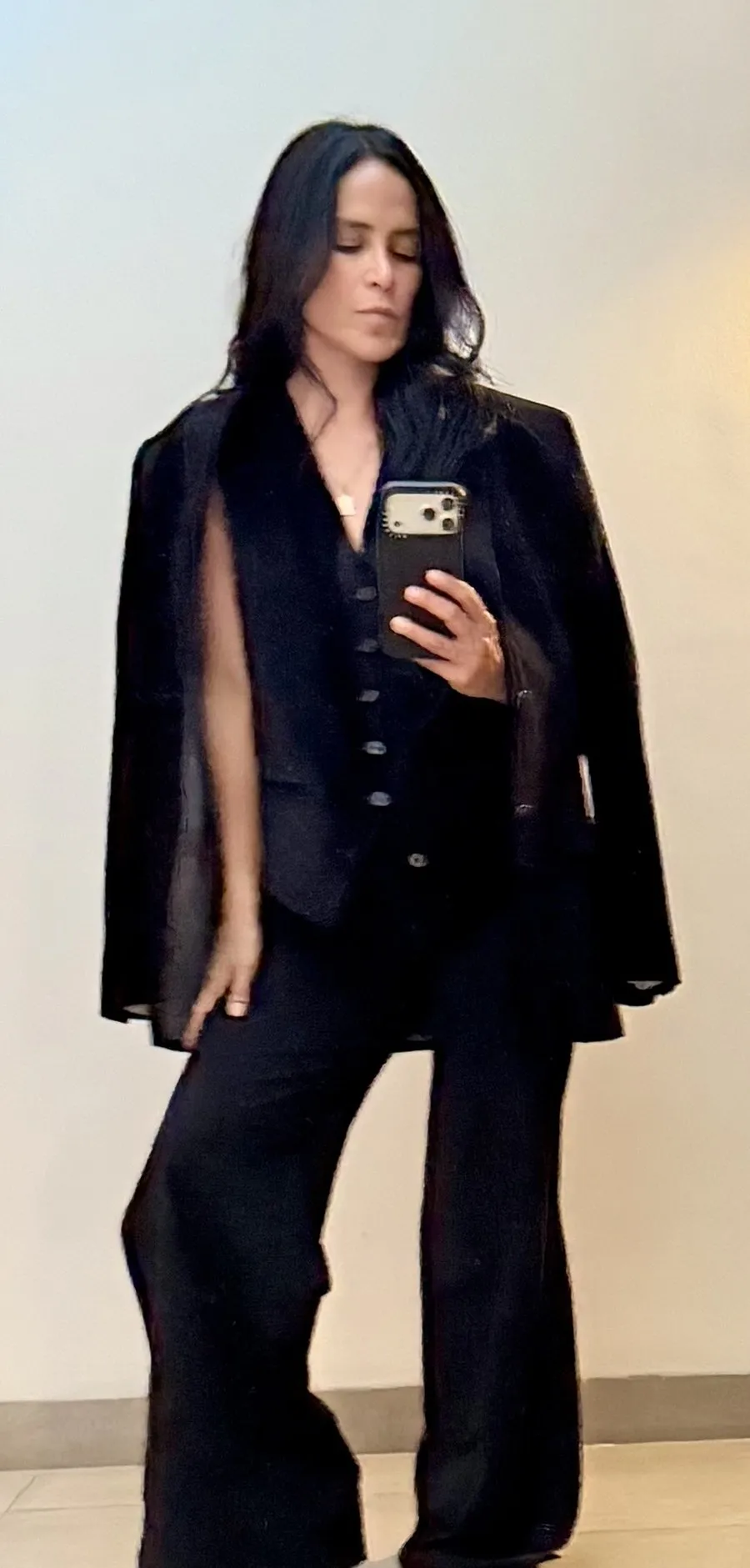
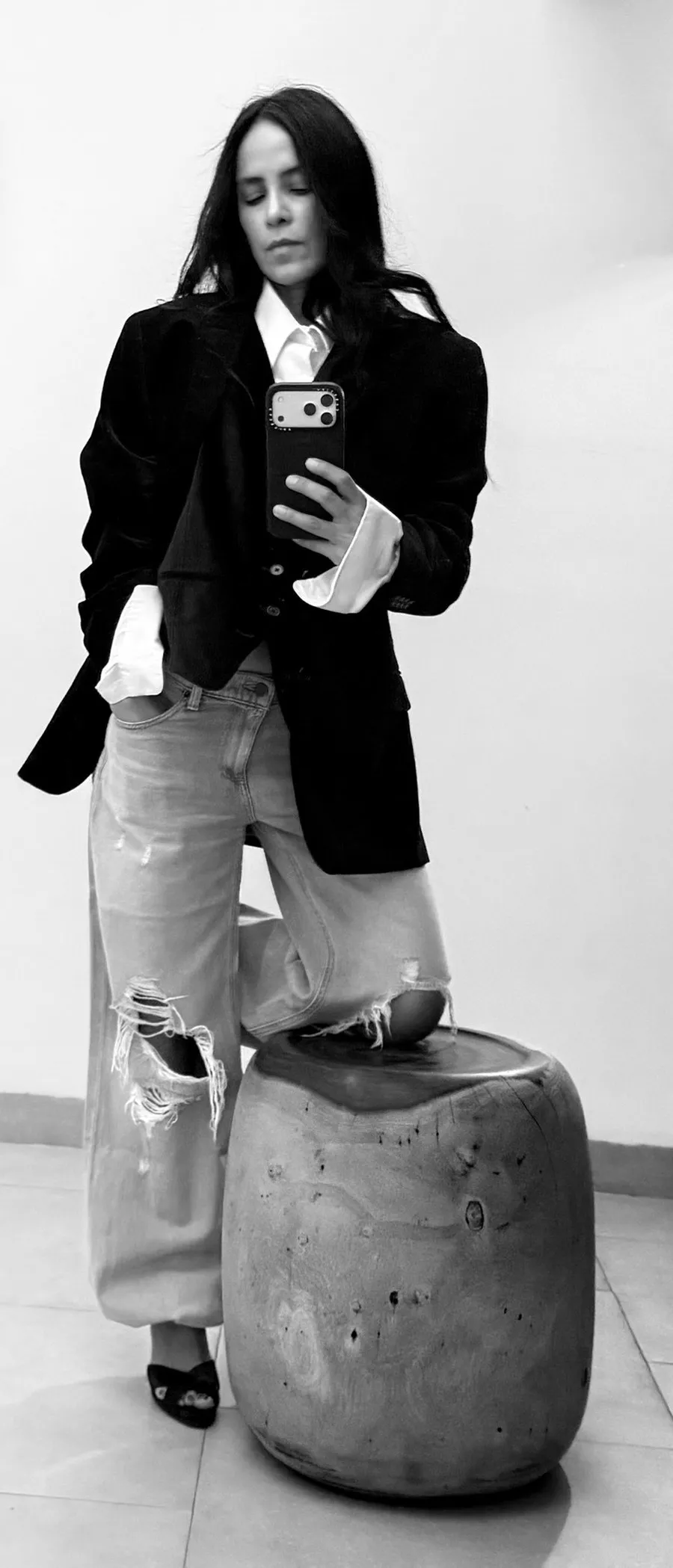
1. With light jeans and heels. The easiest one. Wide ripped jeans keep it relaxed; a heeled sandal and a blazer carried in your hand make it dinner-ready. 2. Over a white shirt with a velvet blazer. The full menswear moment, Annie Hall with better tailoring. Let the shirt cuffs show past the blazer sleeves. 3. With black leather pants. All black, but never flat: matte vest, shiny leather, and the difference in texture does the talking. 4. Over a puff-sleeve shirt with palazzo pants. Romantic sleeves, clean vest, wide trousers: volume on top and bottom, structure in the middle. 5. With the blazer over your shoulders and flared pants. The vest becomes the top and the blazer becomes a cape. Night, done.
One star only: in each of these, one piece leads and the vest supports. When the shirt is dramatic, the vest stays plain; when the leather shines, the vest stays matte.
Buying one like an economist
Smart shopping is the whole point here, so let's run the numbers. Stylists use cost per wear: the price divided by the times you'll actually wear it. A $25 vest you wear twice costs $12.50 a wear. A $90 vest that goes through all five outfits above, fifty times a year, costs under $2. The better piece is the cheaper one.

What earns those fifty wears: a back with an adjustable strap, so it follows your waist instead of tenting; armholes that don't gape; a length that lands at the hip bone; fabric with enough body to hold its shape (wool, a heavy crepe, a good suiting blend); and buttons that feel solid. Black is the most versatile color, but a deep navy or charcoal works the same way if it already has friends in your closet.
The king was half right. The vest never stopped changing. What stays the same is the woman wearing it, deciding where it goes.
Frequently asked questions
Can women over 40 wear a vest as a top?
How do you style a black vest casually?
What can I wear with a black vest at night?
Where did the vest come from?
What should I look for when buying a black vest?
Sources and further reading
- The Diary of Samuel Pepys — Monday 8 October 1666
- Encyclopedia.com — Waistcoat (Fashion, Costume, and Culture)
- Permanent Style — How Charles II invented the three-piece suit
- Grazia USA — Diane Keaton's Annie Hall style (Ralph Lauren foreword to Fashion First)
Read next
The blazer is not a uniform: a short history of a misunderstanding →Neon has no age: the color theory nobody taught you →The poncho is not a hideout: the theory of volume after 40 →A logo is an ad: what brand prominence says about you →Sweet and tough: the theory behind a dress and a leather jacket →Beauty is not pain: why comfort is a style decision →Leopard is a neutral: the history of fashion's most misjudged print →Velvet is not just for the holidays: how to wear a velvet blazer by day →White doesn't expire in September: the truth about no white after Labor Day →The feather skirt is not just for parties: one star piece, three ways to wear it →Leopard on your feet: how to wear leopard print boots with almost everything →One loud piece, quiet basics: how to wear a statement coat without the costume effect →The trench coat is not a raincoat: London and Paris reinvented it (and it's already in your closet) →The corset doesn't squeeze you, it holds you: how to wear one all day without suffering →Loafers are not just for men: five ways to wear them with everything →Turn off the color and texture turns on: what black and white reveals about your style →When your outfit owns every corner: simple is not the same as invisible →Spring 2027 runway trends are already in my closet: what London, Milan and Paris showed →Tailoring that hugs: the black suit, the vest and Milan's cinched waist →The high-low hem is back: my white ruffled dress and London's runways →Leopard is the neutral of 2027: Paris just confirmed it →The evening jacket, now by day: Milan and Paris agree →