
Born to hold, not to hurt: a very short history
The corset started out as tailoring: structure for the torso, the same job a good jacket does today.
The corset is older than the blazer and centuries older than the modern bra. In the 16th century, European women wore stiffened bodices, called a "pair of bodies," that worked the way good tailoring works: they gave the torso a clean line and held the back straight. It was structure, the same job a well-cut jacket does today.

The tight-lacing horror stories came later, and even those have been blown out of proportion. Valerie Steele, director of The Museum at FIT and author of The Corset: A Cultural History, has spent years showing that many of the most famous myths, like women having ribs removed to fit into one, don't hold up. Most women wore their corsets the way we wear a supportive bra: every day, to work, to move, to live.
Then, in the late 1980s, Vivienne Westwood did something radical: she took the corset out from under the clothes and put it on top, as the outfit itself. That's the version that matters for real life, and the one you'll see in this article: a corset worn in broad daylight, as a top.
The right fit: it should hug you and let you breathe
Here's how to tell it'll stay comfortable until dinner. A good corset hugs your torso and straightens your back, but it lets you take a deep breath and sit down to a full meal. If it digs in, pinches or leaves you counting the minutes until you can take it off, it isn't the corset. It's the wrong size or the wrong cut. Next.
 Pockets
 Jeans
 Yellow
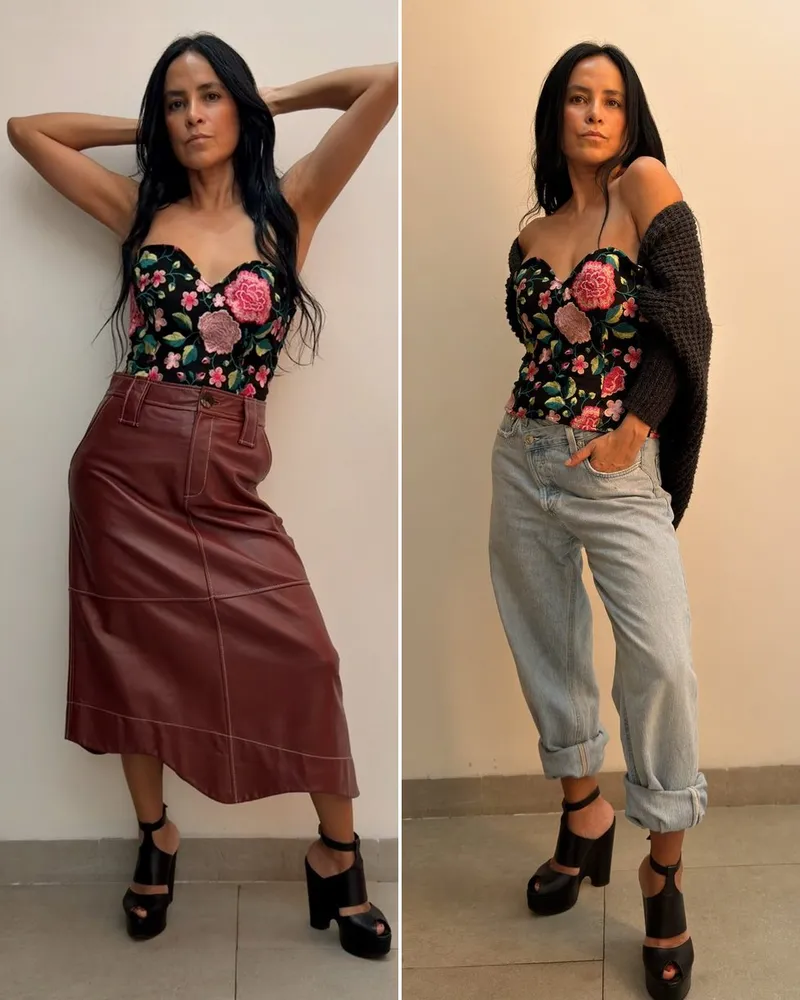
Materials matter more than you think. Look for flexible boning that moves with you, like spiral steel, and skip the rigid plastic strips that poke you every time you sit. The fabric should breathe: heavy cotton, linen, silk or soft leather. An embroidered corset like the one in these photos earns extra points, because the embroidery adds structure without adding stiffness.
Try it on like you'll live in it. Sit, raise your arms, reach for something on a high shelf, laugh. If the corset stays put and you stay comfortable, that's the one.
Two myths to let go of (with love)
This isn't about filling the corset. It's about the corset framing you.
Myth one: you need a big bust to wear a corset. You don't. On a smaller bust, a corset with a straight or soft sweetheart neckline gives a clean, very elegant structure, without trying too hard. The cut does all the work. This isn't about filling the corset; it's about the corset framing you.
 Day
 Night
Myth two: corsets are only for nighttime. That idea belongs on the same list as "after 40, never wear" and every other rule that would have you trade a great piece for something safe and frankly frumpy. To wear a corset by day, balance its strength with relaxed pieces: wide pleated trousers, straight jeans with an open blazer, or over a classic white shirt. The contrast is what makes it look intentional, not like you're on your way to a costume party.
The YB Method, applied: from Saturday coffee to dinner
By day, by night and in any season. That's The Versatility Test, and a good corset passes it with room to spare. Here are five ways to wear the same embroidered corset, from a Saturday coffee to a dinner date.
 Shirt
 Cardigan
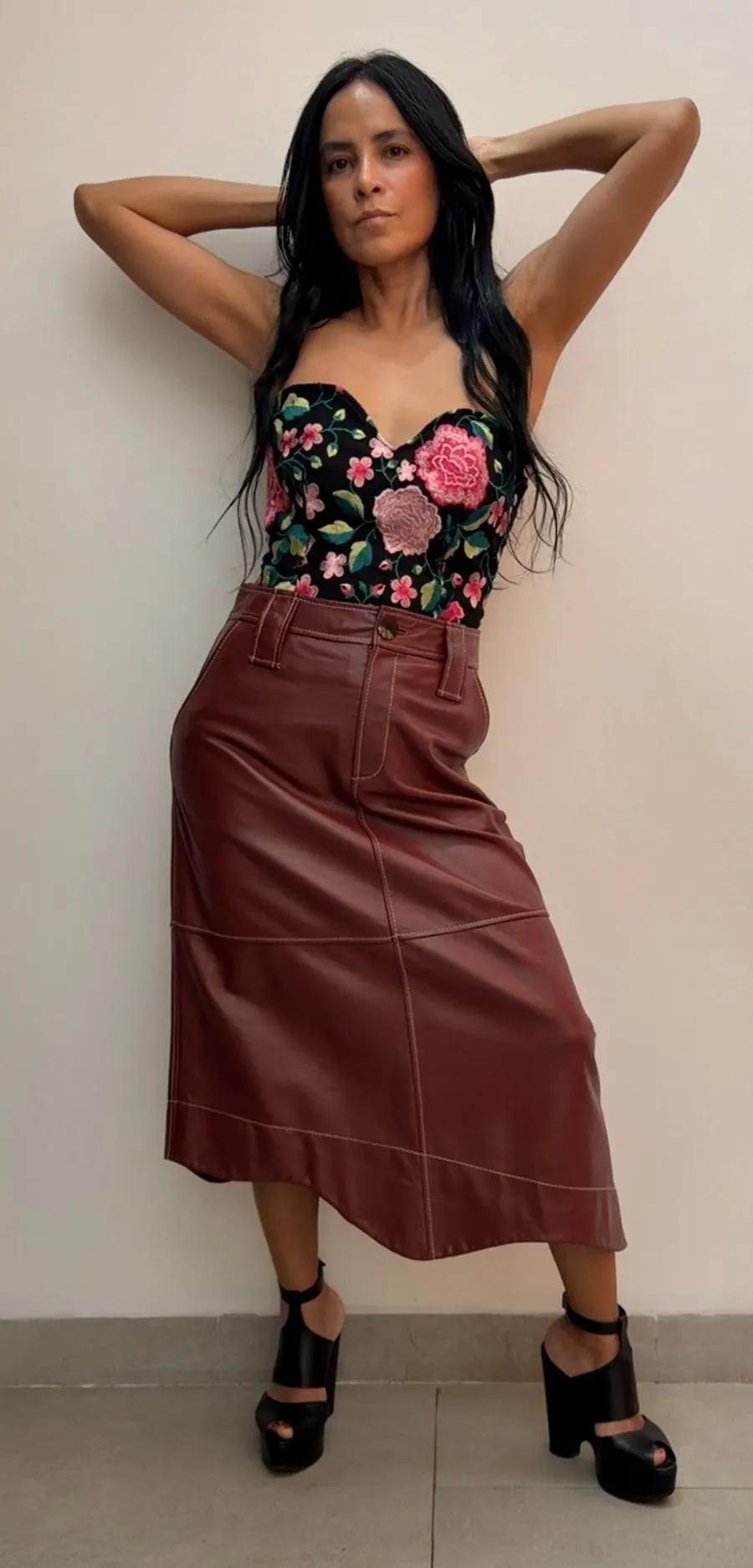
1. With light ripped jeans. The easiest entry point: the denim relaxes the corset instantly. 2. With yellow parachute pants and heeled sandals. Sporty volume below, structure on top. It's the contrast that sells it. 3. With a burgundy leather midi skirt and platforms. The evening version, and still not a costume. 4. With an oversized sky-blue shirt off the shoulders. Pushed down to the elbows, over straight jeans with the cuffs rolled: a corset in work-from-anywhere mode. 5. With a chunky gray waffle cardigan. Slipping off one shoulder, for the cold days that still deserve a little drama.
Coffee to dinner, denim to leather, warm days to cold ones: same corset, a new mood every time. That's what a smart buy looks like. Less is more doesn't mean buying less. It means buying better: smarter, more thoughtful shopping.
Shopping smarter: how to choose a corset you'll actually wear
If you're buying one, buy it to wear on a Tuesday, not to wait for a special occasion. A few things to check before you pay. The fit: it should close without a fight and let you breathe and sit down comfortably. The boning: flexible, never rigid plastic. The fabric: cotton, linen, silk or soft leather, with a lining that feels good against your skin. The neckline: straight or a soft sweetheart is the most versatile, with or without a shirt over it.
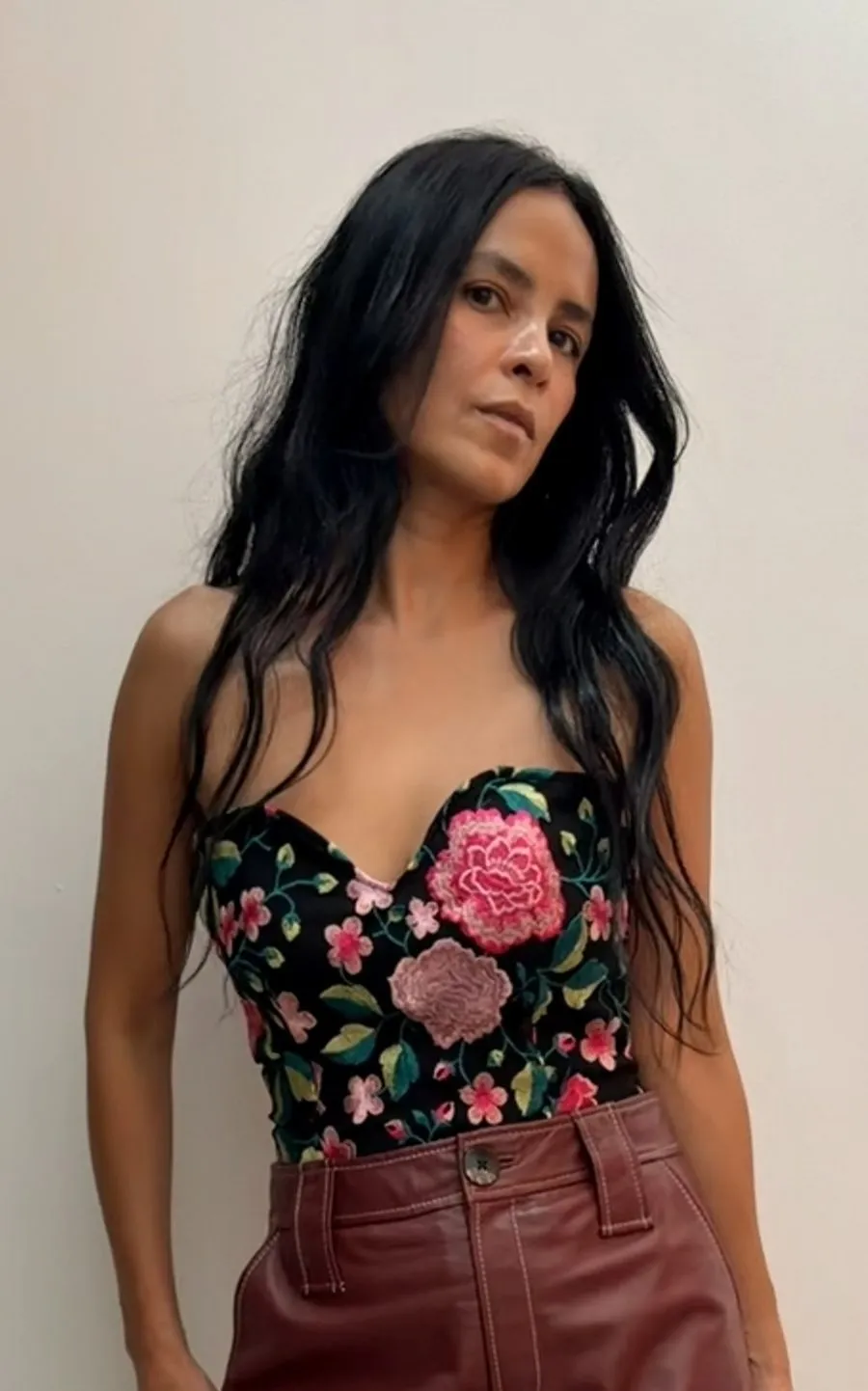
The color: black is the easiest to wear in more ways, and an embroidered or textured black gives you a piece with personality that still goes with everything. And the question that matters most, in front of the fitting room mirror: can I picture it with jeans, with a skirt and under a shirt? If the answer comes fast, that's a smarter buy.
If you want more on comfort as a design requirement, read Beauty is not pain. Because at this age, we're done suffering for our clothes. A good corset doesn't take your breath away. It holds you up.
Frequently asked questions
How do you wear a corset top after 40?
Can you wear a corset all day comfortably?
Do you need a big bust to wear a corset?
How do you wear a corset during the day?
Where did the corset come from?
Sources and further reading
- The Museum at FIT — The Corset: Fashioning the Body (Google Arts & Culture)
- Fashion History Timeline (FIT) — Valerie Steele, The Corset: A Cultural History (2001)
- Collectors Weekly — Everything You Know About Corsets Is False
- Fashion History Timeline (FIT) — 1990 Westwood corset
- FashionUnited — London SS27 trends: corsets and lingerie looks from McQueen, Erdem, Simone Rocha and more
Read next
The blazer is not a uniform: a short history of a misunderstanding →Neon has no age: the color theory nobody taught you →The poncho is not a hideout: the theory of volume after 40 →A logo is an ad: what brand prominence says about you →Sweet and tough: the theory behind a dress and a leather jacket →Beauty is not pain: why comfort is a style decision →Leopard is a neutral: the history of fashion's most misjudged print →The black vest: five ways to wear the garment a king swore would never change →Velvet is not just for the holidays: how to wear a velvet blazer by day →White doesn't expire in September: the truth about no white after Labor Day →The feather skirt is not just for parties: one star piece, three ways to wear it →Leopard on your feet: how to wear leopard print boots with almost everything →One loud piece, quiet basics: how to wear a statement coat without the costume effect →The trench coat is not a raincoat: London and Paris reinvented it (and it's already in your closet) →Loafers are not just for men: five ways to wear them with everything →Turn off the color and texture turns on: what black and white reveals about your style →When your outfit owns every corner: simple is not the same as invisible →Spring 2027 runway trends are already in my closet: what London, Milan and Paris showed →Tailoring that hugs: the black suit, the vest and Milan's cinched waist →The high-low hem is back: my white ruffled dress and London's runways →Leopard is the neutral of 2027: Paris just confirmed it →The evening jacket, now by day: Milan and Paris agree →